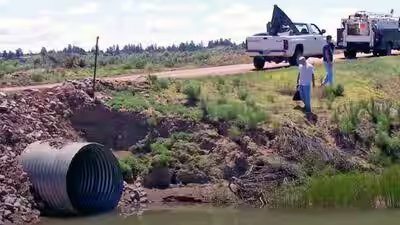







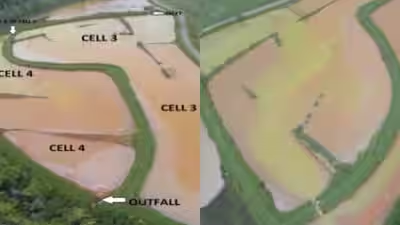
In 2019, US researchers added fluorescent dye to a Pennsylvania mine-water wetland and flew 12 drone missions; a system designed for 29-hour retention held water for only 4.65 hours

Visual observations indicated a retention time of about 61 minutes in Cell 3 and 66 minutes in Cell 4. Monastery Run Wetland 1, near Latrobe, Pennsylvania, was built in 1997-1998 as a passive treatment system for several discharges from an abandoned underground mine. Adequate retention time for iron removal from mine water before discharge to…
Read More

Scientists found a fungus that turns ants into ‘zombies’, forcing them to bite leaves and die so the parasite can spread |

PC: Natural History Museum of Utah A fungus can turn an infected ant into what scientists describe as a real-life ‘zombie ’, taking over its behaviour in a way that helps the parasite reproduce. The phenomenon is linked to Ophiocordyceps unilateralis, a fungus that infects several ant species. After infection, the ant may continue behaving…

Read More

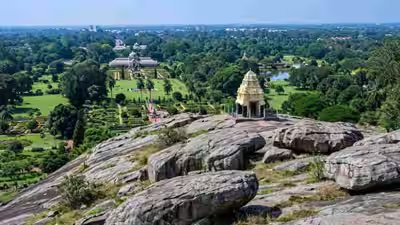
Older than dinosaurs and Himalayas: Why Bengaluru’s 3-billion-year-old Lalbagh Rock is in the news; history of city’s ancient landmark and why citizens are fighting to protect it

On August 30, thousands of Bengalureans gathered at Lalbagh and marched towards the iconic rock. It has been standing in what is now Bengaluru for billions of years, long before humans, cities or even the Himalayas existed. Now, one of Bengaluru’s most significant geological landmarks has found itself at the centre of a modern infrastructure…

Read More

Birdsong Pleasantness: Why do some birdsongs sound better than others? A study of 123 songs in Germany links pleasantness to pitch, bandwidth, and complexity

For centuries, poets have been fixated on birdsong. They called it nature’s closest approximation to music. John Keats was obsessed with the nightingale’s ‘full-throated ease’, while Percy Bysshe Shelley imagined the skylark pouring forth an ‘unpremeditated art’ of ‘shrill delight’ from the heavens. William Wordsworth heard more than a call in the cuckoo; it was…

Read More

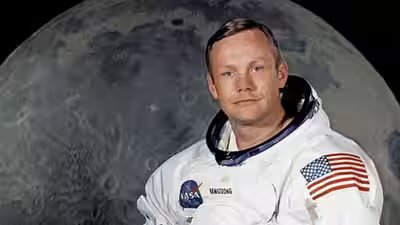
Quote of the day by Neil Armstrong: “We’re required to do these things just as salmon swim upstream” |

Human beings have always been drawn towards challenges that appear difficult, uncertain or even impossible. From exploring unfamiliar places to developing new technologies and solving scientific problems, progress often begins with the decision to attempt something that has never been done before. Astronaut Neil Armstrong, the first person to walk on the Moon, once offered…

Read More

Scientists discovered Mars’ southern interior is 200-400°C hotter than its northern half; the planet may be partly molten beneath the surface |

Scientists have found that Mars is not the geologically uniform ball of rock it might appear from orbit. New analysis of nearly two decades of spacecraft tracking data shows that the mantle beneath the planet’s southern highlands runs between 200°C and 400°C hotter than the mantle beneath its northern lowlands, a temperature gap wide enough…

Read More

In 1967, the US detonated a 29-kiloton nuclear device 4,227 feet below New Mexico to unlock natural gas; 5 tests produced 213 million cubic feet, but the gas had measurable radioactivity

The site was decommissioned. However, contamination remains underground. In 1967, the United States tried an unusual method to increase natural gas production. It detonated a 29-kiloton device and had an explosoion 4,227 feet below the ground in north-western New Mexico to stimulate the flow of natural gas.According to the US Department of Energy (DOE), the…

Read More

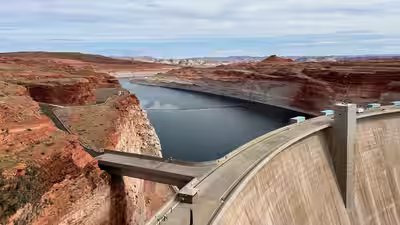
Scientists released up to 45,000 cubic feet of water per second from Glen Canyon Dam for 8 days in 1996; the artificial flood rebuilt Grand Canyon sandbars

Glen Canyon Dam (Image Credit: Canva) For eight days in 1996, the Colorado River through the Grand Canyon experienced something unusual: a deliberately created flood. Scientists working with the U.S. Geological Survey (USGS) and other agencies used Glen Canyon Dam to release water at rates reaching 45,000 cubic feet per second, creating a massive controlled…

Read More

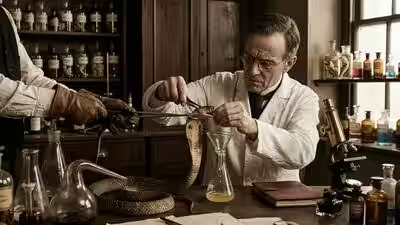
In 1894, two scientists independently used snake venom to create the world’s first antivenoms; one discovery changed treatment of deadly bites |

A snake bite in the late 19th century offered little certainty about what would happen next. There were attempts to counter venom with chemicals and other remedies, but no established treatment could directly neutralise the poison. Then, in France in 1894, two research teams arrived at a very different idea. Albert Calmette, working within the…

Read More

Quote of the day by Richard Feynman: “To every man is given the key to the gates of heaven. The same key opens the gates of…” – a powerful reflection on choice and consequences |

Quote of the day by Richard Feynman (Image: Wikipedia) Some of the most memorable lines are powerful precisely because they manage to say something genuinely complicated in just a few words. This one, often credited directly to the physicist Richard Feynman, is a genuine example. “To every man is given the key to the gates…

Read More