

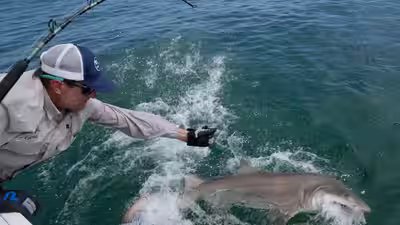
Jaws’ territory is now a great white nursery: 18 young sharks found off New York’s Hamptons as scientists investigate why they keep returning

The waters off New York’s Hamptons, once immortalised as shark-infested territory in Jaws, are revealing a very different story. Researchers have confirmed a summer nursery for young great white sharks in the New York Bight, with studies showing juvenile whites repeatedly using the region’s coastal waters during their early years. NOAA lists Long Island among…
Read More

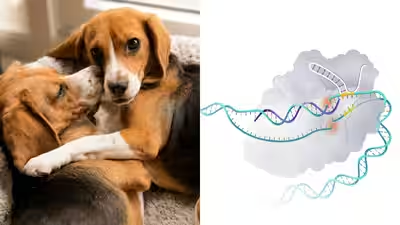
Researchers edited 25 beagle embryos to remove a major dog allergen; two pups born in 2024 produced no detectable Can f 1 and did not trigger one allergic founder’s skin-prick test

Researchers tested saliva and dander from the gene-edited dogs and found no detectable Can f 1 protein. The resulting 25 reconstructed embryos were implanted into a surrogate beagle, which eventually gave birth to Alfie and Bailey. Dogs are often called humans’ best friend, but for people with dog allergies, living with a canine companion can…

Read More

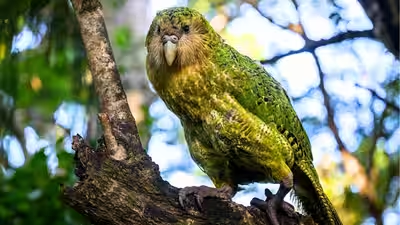
New Zealand’s world’s heaviest parrot was on the brink with only 51 birds left; now after decades of intensive conservation by wildlife experts, its population has surged to 325 |

New Zealand’s critically endangered kākāpō, the world’s heaviest parrot, has reached a remarkable conservation milestone after decades of intensive efforts to pull the species back from the brink of extinction. Its population has climbed to 325 birds after 90 chicks from the 2026 breeding season were officially added to the count, marking the highest population…

Read More

Quote of the day by Stephen Hawking: “I believe the simplest explanation is, there is no God. No one created the universe and…” – a profound reflection on life, death and the universe |

Quote of the day by Stephen Hawking Few questions have occupied the human mind for quite as long as why the universe exists, and whether human life actually has any real purpose. For centuries, people have approached these questions through religion, philosophy and science, often arriving at genuinely very different conclusions. Stephen Hawking, one of…

Read More

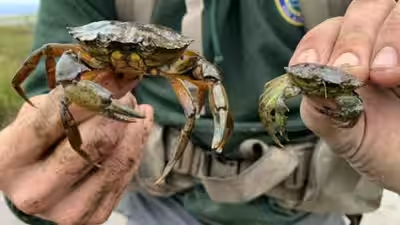
New England has battled invasive green crabs for more than 200 years; now people are eating the destructive species in a bid to protect shellfish, wetlands and coastal ecosystems

Since time immemorial, humans have been consuming food derived from the land, air and water. From vegetables and birds to even crabs, there is not much we have not used to survive on. But currently, people in New England are feasting on green crabs not to survive themselves but to help the native species subsist….

Read More

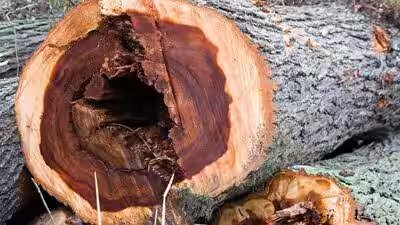
60 years after Dutch elm disease devastated America’s 100 million iconic trees, now scientists have infected 6,000 young elms in a radical bid to bring them back

Six decades ago, Dutch elm disease swept across the United States, killing an estimated 100 million American elms that once shaded streets, parks and college campuses from coast to coast. The fungus, carried by bark beetles, turned majestic, vase-shaped trees into dead standing skeletons and changed the look of countless towns. Now, in a bold…

Read More

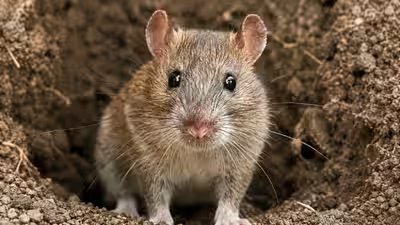
In 2011, up to 30,000 rats were eradicated from Palmyra Atoll; five years later native tree seedlings jumped from fewer than 150 to more than 7,700

In 2011, conservation teams set out on one of the biggest rat eradications ever on a tropical atoll, targeting an estimated 30,000 invasive rodents on Palmyra Atoll in the central Pacific. The goal was not just to remove a pest, but to restore an entire ecosystem that had been suppressed for more than a century….

Read More

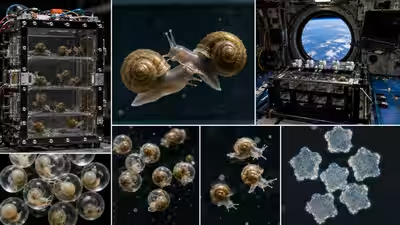
In 2003, Nasa researchers found freshwater snails mated and reproduced in space, with gravity-sensing statoconia 50% larger by volume than ground controls |

In 2003, Nasa researchers reported that freshwater snails carried into orbit aboard the Space Shuttle had mated and reproduced during their mission, allowing their gravity-sensing organs to develop entirely under microgravity. According to the study published in PubMed, tittled ‘Otoliths developed in microgravity‘ formed part of the results of the STS-90 Neurolab Spacelab mission, a…

Read More

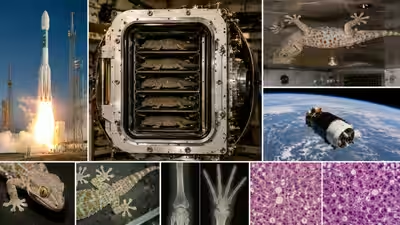
In 2005, NASA sent five geckos into space for 16 days without food or water, with later tests revealing changes in their bones and liver cells |

In 2005, five thick-toed geckos left Earth aboard the unmanned Russian spacecraft Foton-M2, embarking on a 16-day orbital flight with no access to food or water. The mission, a joint undertaking between Nasa and the Russian Academy of Sciences, was designed to test whether a reptile species could serve as a viable model for studying…

Read More