




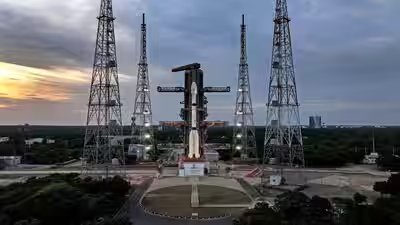
24×7 eye on China, Pakistan borders: Why EOS-05 launch on ‘Naughty Boy’ is key to India’s security

In this image posted on Sept. 1, 2026, The Geosynchronous Satellite Launch Vehicle (GSLV-F17) stands integrated on the Second Launch Pad at the Satish Dhawan Space Centre (SDSC-SHAR), in Sriharikota, Andhra Pradesh. Scheduled for liftoff on September 4, the 19th GSLV flight will place the Earth Observation Satellite EOS-05 into a Sub-Geosynchronous Transfer Orbit. (Image…
Read More

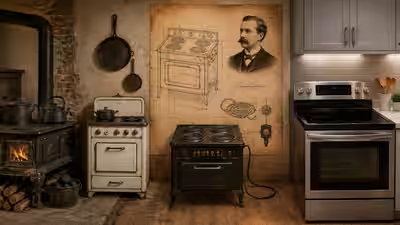
In 1896, William Hadaway patented an electric stove, helping transform cooking from wood, coal and gas to modern electric appliances |

In 1896, American electrical engineer William Hadaway received the first patent for an electric stove, marking an important step in the development of electric cooking. His patent came just four years after Canadian executive Thomas Ahearn put together the first electric range in 1892, as cooking technology was moving beyond wood, coal and gas. According…

Read More

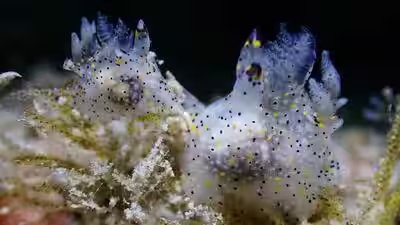
Meet Ho-Yeung Chan, the student who accidentally discovered a new sea slug smaller than a grain of rice |

Thecacera sesama. Image Credit: Ho-Yeung Chan An accidental encounter by a student during a recreational dive has led to the formal description of a ‘tiny new sea slug’ from the waters of north-eastern Taiwan. ‘Ho-Yeung Chan’ first noticed the animal while diving and later helped establish that it belonged to a species previously unknown to…

Read More

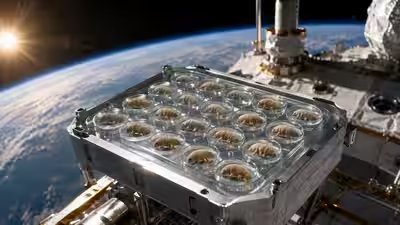
In 2007, ESA exposed 3,000 tardigrades to space vacuum and solar UV radiation in low Earth orbit; 68% revived when the microscopic animals were rehydrated |

In September 2007, the European Space Agency launched roughly 3,000 tardigrades into low Earth orbit aboard the Biopan-6 platform on the FOTON-M3 mission. Known as water bears, these microscopic animals were dried into a dormant state before being exposed directly to the vacuum of space, alongside doses of solar and cosmic radiation, for ten days…

Read More

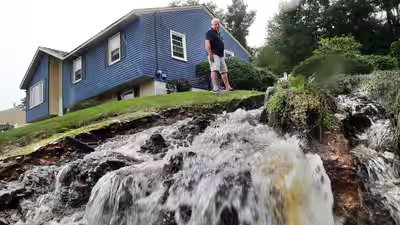
In 1999, scientists dropped 45 tons of wollastonite over a 29-acre New Hampshire watershed to replace calcium lost to acid rain; by 2013, it was exporting 30 times more inorganic nitrogen than nearby watersheds

In 1999, scientists dropped 45 tons of wollastonite over a 29-acre New Hampshire watershed A large-scale effort to restore an American forest damaged by acid rain had an unexpected environmental effect when added nutrients caused a huge increase in nitrogen flowing into nearby streams. In October and November 1999, researchers spread about 45 short tons…

Read More

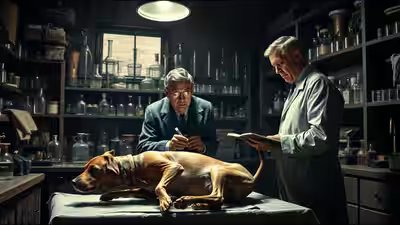
In 1921, a young Canadian doctor experimented with starving dogs; one dog’s dramatic reaction helped lead to the discovery of insulin |

Representative Image of Frederick Banting and Charles Best conducting early diabetes research in a laboratory with dogs (AI-generated image) In May 1921, Frederick Banting arrived at the University of Toronto with an idea about diabetes and little laboratory experience. Professor John J.R. Macleod gave him space in the physiology department, several dogs and Charles Best,…

Read More

Meet Kaia Minn, the 13-year-old Massachusetts inventor who turned discarded orange peels into biodegradable seed pods for reforestation |

Kaia Minn at the National Academy of Inventors conference. Image Credit: kaiaminn.com A discarded citrus peel is not the sort of thing most people would associate with restoring forests. But for 13-year-old Massachusetts inventor ‘Kaia Minn,’ it became the starting point for a simple idea with potentially far-reaching environmental uses. Minn has developed a ‘biodegradable…

Read More

He began studying the Amazon in the 1970s; 50 years later, Philip Fearnside’s research has calculated the costs of losing the Amazon on account of deforestation, dams and highways

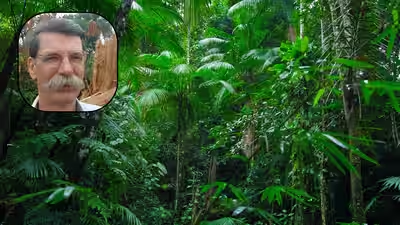
Philip Fearnside’s research has calculated the costs of losing the Amazon on account of deforestation, dams and highways The Amazon rainforest has been described in terms of its enormous size, biodiversity and importance to the global climate. But for Philip Fearnside, understanding the forest has also meant asking a more practical question: what does it…

Read More

In 1945, an Arizona professor started hunting glowing scorpions at night; decades later his laboratory had become a major centre for venom research |

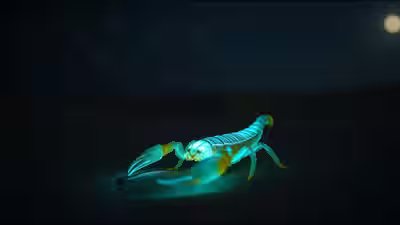
​Representative Image of fluorescent scorpions glowing across a desert landscape after dark (AI-generated image) In 1945, an Arizona State University professor began wandering the desert at night, hunting scorpions that glowed under his black light, and few people around him understood why. That professor, Herbert L Stahnke, was already the nation’s leading authority on scorpions…

Read More