









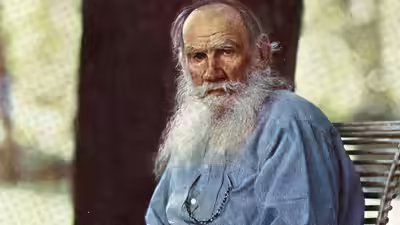
Love and grief have always been closely related in human life. Those who love deeply will often feel more deeply when faced with loss, heartbreak, separation or disappointment. Russian writer and philosopher Leo Tolstoy explored this emotional truth in one of his most moving quotes: “Only people who are capable of loving strongly can also suffer great sorrow, but this same necessity of loving serves to counteract their grief and heals them.That quote still strikes a chord with people of all ages because it talks about pain and healing. Tolstoy does not present sorrow as a weakness. Rather, he says, emotional vulnerability comes with the package of loving deeply. But the same love that produces grief becomes the force that helps people heal from emotional pain.This thought is still relevant today in a world where many people are suffering from loneliness, emotional stress, broken relationships and personal loss. Tolstoy’s words serve as a reminder that grief is often a sign that something meaningful was in their lives. His message is not just one of sadness. It’s a story of emotional resilience, human connection and the healing power of love.
Quote of the day by Leo Tolstoy
“Only people who are capable of loving strongly can also suffer great sorrow, but this same necessity of loving serves to counteract their grief and heals them.”
Why Leo Tolstoy’s quote still connects with people around the world
Tolstoy’s quote hints at a universal human experience. Everybody who has loved deeply has suffered emotional pain at one time or another. Attachment is often a source of grief, whether it be the death of a loved one, the end of a relationship, separation from family or emotional disappointment.This quote is powerful because it doesn’t separate love and suffering. Instead, it sees the two feelings as part of the same human experience. To know all of love’s depths, Tolstoy believed, one must also be willing to mourn.But the quote is also hopeful. Tolstoy argues that feelings cannot be suppressed and that healing does not occur through it. It’s what happens when you keep loving, connecting, caring, and remaining emotionally open after the pain.Nowadays, psychologists often explain that emotional healing is easier when people have strong social ties, relationships, and emotional support systems. Long before modern psychological studies became popular, Tolstoy expressed this idea in many ways.
The emotional depth behind Tolstoy’s understanding of human nature
Tolstoy’s writing often revolved around emotions, morality, relationships and the meaning of life. His characters were seldom pure heroes or villains. They were about real human struggles, emotional conflicts and personal growth.This quote demonstrates Tolstoy’s awareness of emotional complexity. He knew love does not always mean joy or simplicity. Deep affection is often accompanied by fear, attachment, sacrifice and emotional dependence. Grief results naturally from the loss of something of value.But Tolstoy also believed that emotional ties give people meaning and strength. Even in suffering, humans keep looking for care, empathy and understanding from others.His words imply that emotional pain should not be considered mere suffering. It can also speak to the depth of human relationships and the importance of connection in life.
How love and grief remain deeply connected in everyday life
We see in many parts of daily life how love and sorrow are connected. Parents worry so much about their children because they love them so much. Close relationships dissolve, and friends are heartbroken. People still miss their loved ones even years after losing them. Strong emotional bonds.That’s the emotional truth Tolstoy expresses in his quote. Grief is often a function of how much you loved.Modern research into emotional health also shows that attachment shapes the way in which people experience loss. Emotional connections influence mental well-being, stress levels and trauma recovery.Supportive relationships often help people recover emotionally at the same time. Support from family and friends, affection, and empathy can lessen loneliness and help people cope with difficult experiences.This idea is very much in tune with Tolstoy’s idea that love itself is part of the healing process.
Leo Tolstoy’s life shaped many of his philosophical ideas
His personal life had a considerable impact on his ideas about emotions, morality and human relationships. He was born in Russia in 1828 and went on to become one of the most influential literary figures in history. His novels dealt with politics and society, and with inner emotional conflicts.At various times in his life, Tolstoy suffered personal crises, spiritual doubts, and emotional trauma. These experiences fed into many of his philosophical reflections.Instead of just success or accomplishment, Tolstoy became increasingly interested in deeper questions of meaning, compassion, morality and emotional truth.His ideas are not some remote or abstract thing, but have a deep human quality that resonates with many readers.
The healing side of love that Tolstoy wanted people to understand
Healing is one of the most important aspects of this quote. Tolstoy does not imprison the reader in sadness. He says that the capacity to love also helps people heal emotionally.This message still resonates today because many people perceive vulnerability as a weakness. Tolstoy’s words point to the opposite. It’s true, emotional openness can hurt, but it also creates compassion, understanding and healing.Those who still care about others after emotional pain usually rebuild emotional strength over time. Love builds support systems, memories, emotional meaning, and human connection. But they can wear down grief slowly.The quote, therefore, becomes realistic and hopeful. It is a suffering, but it also acknowledges man’s ability to heal.
Why Tolstoy’s words remain relevant in modern mental health conversations
Mental health discussions today often focus on emotional resilience, trauma recovery, loneliness, and emotional well-being. Interestingly, many of these conversations connect closely with ideas that Tolstoy explored more than a century ago.Experts frequently emphasise that emotional suppression can increase distress, while healthy emotional expression and supportive relationships improve recovery.Tolstoy’s quote aligns with this understanding. He suggests that emotional depth should not be feared. Love may expose people to sorrow, but isolation and emotional detachment can create different forms of suffering.In modern society, where digital communication sometimes replaces deeper emotional connections, Tolstoy’s words continue to remind people about the importance of genuine human relationships.
The literary legacy of Leo Tolstoy still shapes readers worldwide
Tolstoy is one of the most honoured literary personalities in the history of the world. His novels, essays and philosophical writings continue to influence literature, psychology, ethics and social thought.His ability to blend emotional realism with philosophical insight made his work timeless. His exploration of love, morality, grief, family, purpose and personal transformation often speaks to readers.Those who have never read his novels may recognise his quotes, as they echo experiences that feel universally human.That particular quote keeps getting passed around because it speaks to a truth that many people feel, even if they can’t put it into words.
Other famous quotes by Leo Tolstoy
- “All, everything that I understand, I understand only because I love.”
- “If you want to be happy, be.”
- “Everyone thinks of changing the world, but no one thinks of changing himself.”
- “The two most powerful warriors are patience and time.”
- “True life is lived when tiny changes occur.”
- “There is no greatness where there is no simplicity, goodness and truth.”
- “Respect was invented to cover the empty place where love should be.”
- “Happiness does not depend on outward things, but on the way we see them.”
Why this quote continues to inspire readers today
Tolstoy’s quote about love and sadness still holds because it’s emotionally truthful. It acknowledges that deep relationships can be painful, but it also tells people that the emotional connection is one of the most important parts of human life.The quote is not saying, don’t love so you won’t have grief. Rather, it suggests that love itself is the strength to recover from grief.In a fast-paced world where emotional struggles are often hidden behind public appearances, Tolstoy’s words still offer comfort, understanding and perspective. His message is simple but powerful. To love deeply can cause suffering, but it is also what allows people to heal and move on.