










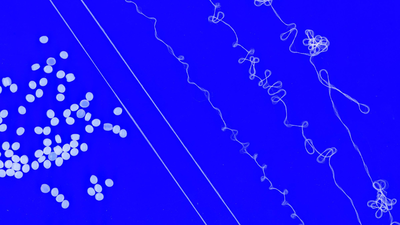
MIT engineers have developed a new elastic yarn made from polyethylene that could offer a more recyclable alternative to conventional stretchy fibres such as spandex. The material is designed so its components can be melted together and processed into new fibre instead of requiring complex separation. In laboratory tests, the researchers melted and respun the yarn 10 times and found that it retained its strength and flexibility through the recycling cycles. The team says the yarn could eventually be used in lightweight and stretchy clothing and then recycled into fresh fibre or other plastic products. The development addresses a major problem in textile recycling because many stretchy garments contain blended fibres that are difficult to recycle together. However, the technology is still at the research stage. It has not yet become a commercial replacement for spandex.
How MIT engineers created the recyclable elastic yarn
The researchers developed the yarn using two polyethylene-based materials with different properties. A softer material forms the elastic core while a stiffer material creates the outer sheath. Unlike conventional spandex blends, both components belong to the same broad family of plastics. This means they can be processed together during recycling. To produce the yarn, the researchers heated polyethylene resin pellets to around 350°F, or 177°C, until they melted. The molten materials were then pushed through tiny openings to create thin fibres. The resulting structure combines an elastic core with a stronger outer layer. The researchers designed it to provide the stretch and durability needed for textile applications while retaining the ability to undergo thermal recycling.Spandex is widely used in clothing because it gives garments elasticity and allows them to stretch without losing their shape. It is commonly combined with polyester or nylon in products such as sportswear, activewear and other fitted garments. The problem emerges when these clothes are discarded. The different materials cannot easily be melted together and turned into new fibres. Separating them can require additional processing and can make textile-to-textile recycling more difficult. MIT researcher Svetlana Boriskina said about 80% of textiles on the US market contain some amount of spandex. Her team wanted to develop an elastic material that could avoid this problem by using components that remain compatible during recycling.
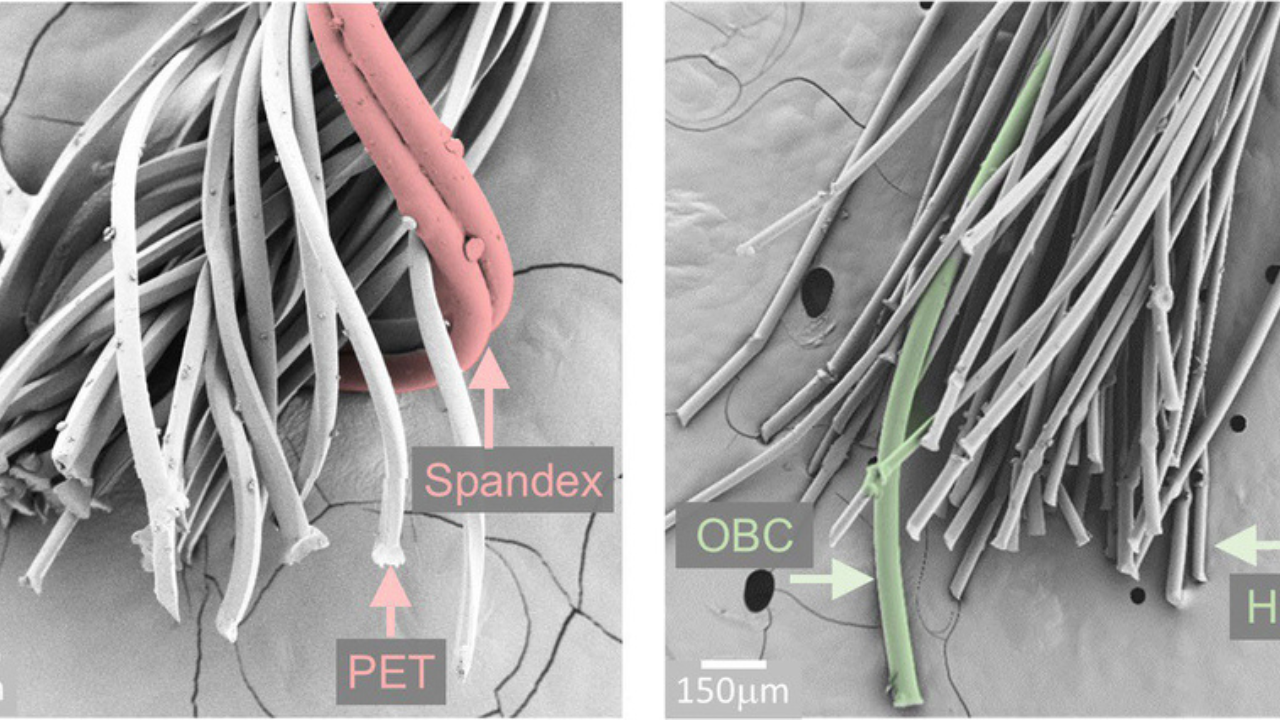
SEM images compare conventional PET-spandex yarn with MIT’s new recyclable polyethylene yarn.
The yarn retained its properties after 10 recycling cycles
The researchers tested whether the new yarn could actually withstand repeated recycling. They melted the material and respun it into new fibre before repeating the process. After 10 recycling cycles, the yarn retained its strength and flexibility, according to the researchers. The team also demonstrated that the material could be processed into textiles through knitting and weaving. This is important because the aim is not simply to create recyclable plastic but to produce a material that can function as a textile during its first life and then return to the manufacturing cycle after use. The researchers say the material could potentially be turned back into yarn or used to produce other plastic components such as buttons and belt buckles.
The material could offer an alternative to spandex
The researchers designed the yarn to reproduce important characteristics of conventional elastic fibres. It is lightweight and flexible and can be processed into textile structures. The team believes the manufacturing process could eventually be scaled to produce larger quantities of yarn. If that happens, the material could potentially be used in garments that require stretch while offering a simpler route towards recycling. However, the research does not mean that spandex has already been replaced. The experiments were conducted at the research stage and further development would be needed to assess the yarn’s performance in commercial garments, large-scale manufacturing and real-world recycling systems.
Researchers hope the yarn can reduce textile waste
The broader aim is to make textiles more compatible with a circular economy. Instead of sending an old stretchy garment to landfill or incineration, the material could theoretically be collected, melted and converted into fresh yarn. The researchers hope repeated recycling could reduce the need to manufacture new textile material from virgin plastics. The work builds on earlier research by Boriskina’s group involving polyethylene-based yarns with properties such as moisture wicking and stain resistance. The latest work adds elasticity and repeated thermal recyclability to the approach. The study was supported in part by the US Army Research Office, Office of Naval Research Global and the MIT Portugal Programme. The researchers now hope the technology can eventually move beyond laboratory testing and towards practical textile production.


