










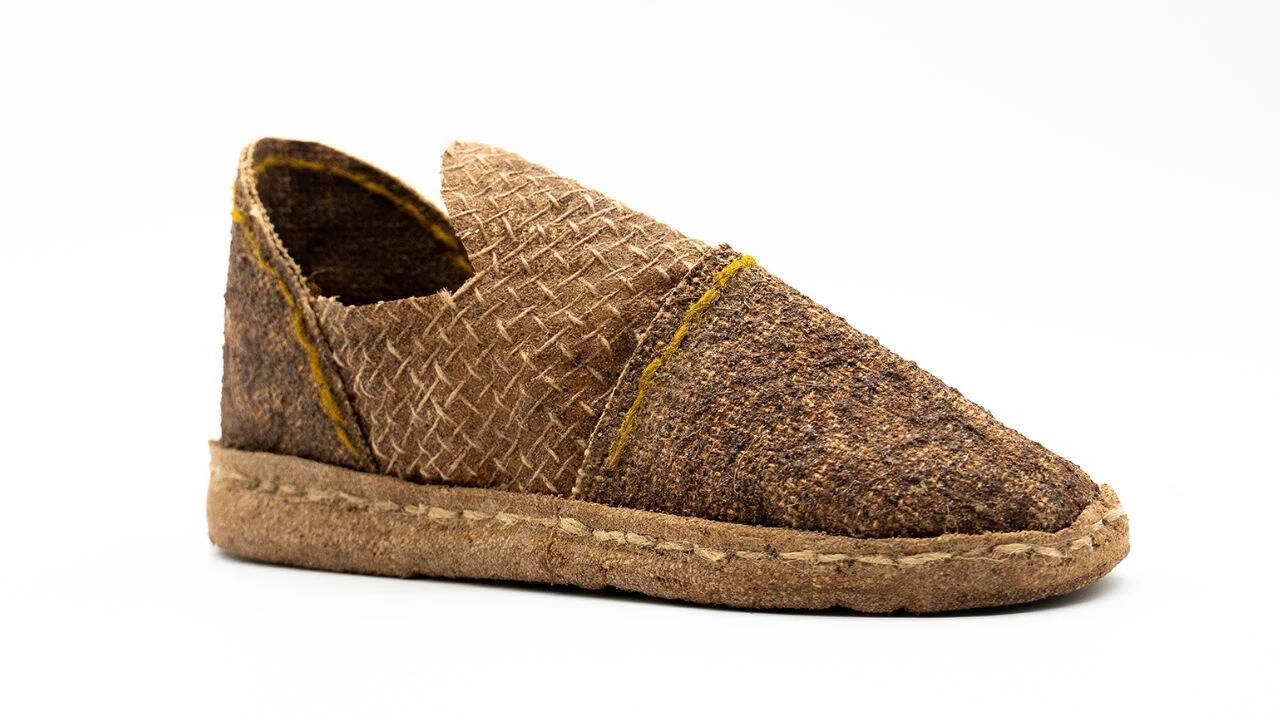
Daniela Felix, a designer based in the UK, has developed a biodegradable shoe using discarded avocado peels and other natural materials. It is called BioStride; the footwear concept combines an avocado peel biomaterial with natural cork, jute mesh, hemp thread, and natural latex. The project aims to address the environmental impact of conventional footwear, which often combines synthetic materials that are difficult to recycle and break down.Felix developed the material using avocado peel, a food waste product she became interested in while growing up in Mexico. According to the James Dyson Award, BioStride is designed to perform during use and biodegrade safely after its lifecycle. The prototype has undergone flexibility and water-resistance testing, although its durability still needs improvement.
How avocado peel waste is being transformed into sustainable footwear material
BioStride uses upcycled avocado peels as its main material, turning food waste into a component for footwear. Felix’s inspiration came from growing up in Mexico, where avocados were part of everyday life. She questioned why the fruit was valued for its flesh while its peel was discarded, despite the resources required to grow it.The peel’s naturally antimicrobial phenols also suggested that it could serve as a functional material. She explored its potential to create a durable and protective biomaterial for shoes. The resulting upper combines avocado peel biomaterial with a jute mesh, which reinforces the material while allowing it to remain flexible. The project treats discarded peel as a potential material source rather than waste.
PC: The James Dyson Award
Natural cork, latex and hemp thread form the shoe’s other components
The shoe uses several natural materials to create a biodegradable footwear system. Its sole is made from natural cork bound with natural latex. Felix shaped it using a 3D-printed mould to provide cushioning, water resistance, and structure. The upper is reinforced with jute mesh, while natural hemp thread holds the shoe together without synthetic adhesives. Turmeric is used to dye the visible stitching on the upper.The design avoids synthetic glues and aims to ensure that its different components follow the same end-of-life approach. Once the shoe reaches the end of its useful life, it can be composted or buried. Moisture, microorganisms, and soil conditions gradually break down its natural components.
Daniela Felix tested multiple materials to develop BioStride’s biodegradable design
Felix developed around ten avocado-based material samples, adjusting their ingredients and proportions during the design process. The first version behaved like a thin, sticky bioplastic. Later samples became stronger but too rigid, cracking when bent. After achieving flexibility without sufficient resistance, she reinforced the material with jute mesh. The sole also went through several trials.A bicarbonate-based biofoam was too thin, while a cork-gelatine mixture was unsuitable and contained animal-derived material. After three latex-based trials, she developed a cork and natural latex sole with better structure. The final prototype involved sketches, 3D modelling, a printed sole mould and a shoe last.
BioStride remains a proof-of-concept project with further testing planned
BioStride is currently at the proof-of-concept stage, and its material formulation still needs refinement to achieve the required durability. The existing prototype has undergone flexibility and water-resistance testing and is described as moderately functional. Felix plans to develop additional material samples and improve their durability and consistency through mechanical and environmental testing.She also intends to refine the production process so it becomes repeatable and eventually standardised. Another part of the next stage involves speaking with avocado growers to explore access to peel waste on an industrial scale. Felix also plans to investigate applications beyond footwear to demonstrate the wider potential of food-waste biomaterials. The project received a Red Dot Design Award 2026 in the Design Concept – Sustainability – Next Gen category.