







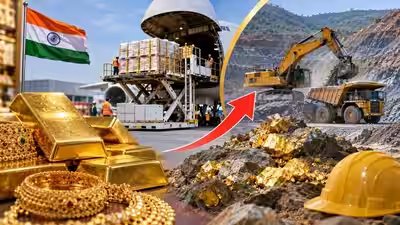
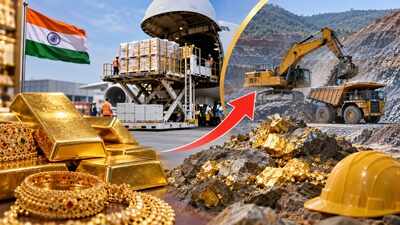
India is estimated to have around 501 million to 518 million tonnes of primary gold ore resources, containing an estimated 600 to 607 tonnes of primary gold metal. Yet, it continues to import gold in a big way. In fact, India is the world’s fifth largest gold importer.Despite the country’s gold resources, mining activity has yet to gain significant momentum. Gaps in geological information, inadequate exploration, lengthy project development periods, the design of mining auctions and the lack of commercial viability of projects have discouraged investors from entering the sector.
India’s gold mining focus
Now, Niti Aayog is considering a blueprint to boost gold exploration and mining in India, with the aim of attracting investment into the sector as the country continues to import large quantities of the precious metal every year, people familiar with the discussions told ET.The proposed framework is expected to suggest fiscal incentives for gold mining and changes to the regulatory regime. These could include longer-term mining rights and a system for rating bidders, intended to draw investment while ensuring that companies have the technical capabilities needed to develop India’s gold resources sustainably, the people said.The blueprint is also likely to focus on simplifying regulatory clearances through better coordination between the Centre and state governments. Other proposed measures include adopting internationally accepted reporting standards to strengthen the quality of geological data and establishing a stable, predictable policy regime to make projects more attractive to lenders and investors.Last week, Niti Aayog vice chairman Ashok Kumar Lahiri discussed a draft report titled ‘India’s Gold Mining Policy: Challenges, Learning and the Road Ahead’. Prepared by Pahle India Foundation (PIF) with support from the World Gold Council (WGC), the report examines the challenges facing the sector and the steps needed to address them. The discussions focused on how its key recommendations could be incorporated into India’s gold mining policy.Although the official think tank has reached agreement on the broader macroeconomic recommendations, it has sought more detailed inputs from PIF on specific aspects of the proposed framework.These include identifying credible bidders, ensuring that mining projects are financially viable and improving access to geospatial data to make the sector more attractive to investors, one of the people cited above said.
India’s gold reserves for mining
Bihar accounts for the largest share of India’s known gold reserves at 44-45%, followed by Rajasthan at 25% and Karnataka at 21%. West Bengal and Andhra Pradesh account for 3% each, while Jharkhand holds 2%.India’s gold imports fell 39.9% year-on-year to $24.78 billion during April-October 2026, compared with $41.24 billion in the corresponding period, as global gold prices corrected to below $4,000 per ounce.Despite the decline, India remains the world’s fifth-largest gold importer, accounting for around 6.7% to more than 9% of the value of global gold imports.The country’s gold imports touched an all-time high of $71.98 billion, equivalent to more than 800 tonnes, in 2025-26. Switzerland was the largest source of these imports, contributing 34-40% of the total.