











Wilhelm Röntgen discovered X-rays, and transformed hospital diagnosis forever. Image credit – Wikimedia
Wilhelm Röntgen was working alone in his laboratory during late 1895 when he observed an anomalous phenomenon. An observation was made that a fluorescent screen in the laboratory glowed even after the experimental Crookes tube was wrapped up with black paper. This mysterious glow seemed to be impossible for that time, but this phenomenon paved the way for one of the major breakthroughs in the field of medicine: the discovery of X-rays.The use of rays in experiments started revolutionising medicine immediately after their discovery. Soon afterwards, it was observed that the rays could be applied in medicine to find out the location of broken bones or other foreign particles without surgery.An anomalous glow turned the experimentSome historical medical records indicate that the experiment was conducted by Röntgen with the help of a Crookes tube. It was noted that on the day of November 8, 1895, a Crookes tube, which is known to have applications for studying electrical currents in gases, was wrapped with black cardboard to prevent light emission. It was found that something mysterious had passed through the black cardboard to the fluorescent screen. It turns out that the discovery was not intentional, although it resulted from systematic observation and testing by researchers at the Journal of Medical Biography.While the discovery can be considered accidental, it is important to know that Röntgen immediately started performing methodical tests of mysterious rays to understand their nature. He named them “X-rays,” since the letter X indicated unknown things in mathematics.Anatomically perfect hand of Röntgen’s wifeNot long after this discovery, Röntgen performed one of his first radiographic procedures, which became the first-ever X-ray. On December 22, 1895, Röntgen took a picture of his wife Bertha’s hand, including bones and a wedding ring on her finger. It was published in PubMed as one of the most influential discoveries in history and the very first anatomical radiograph ever taken.This picture stunned observers as it presented information about what was happening inside the body, allowing them to see through skin to internal organs without any surgery. The other historical analysis states that the picture of the hand received attention not only due to its scientific significance, but also because it appeared to be very human and clear.
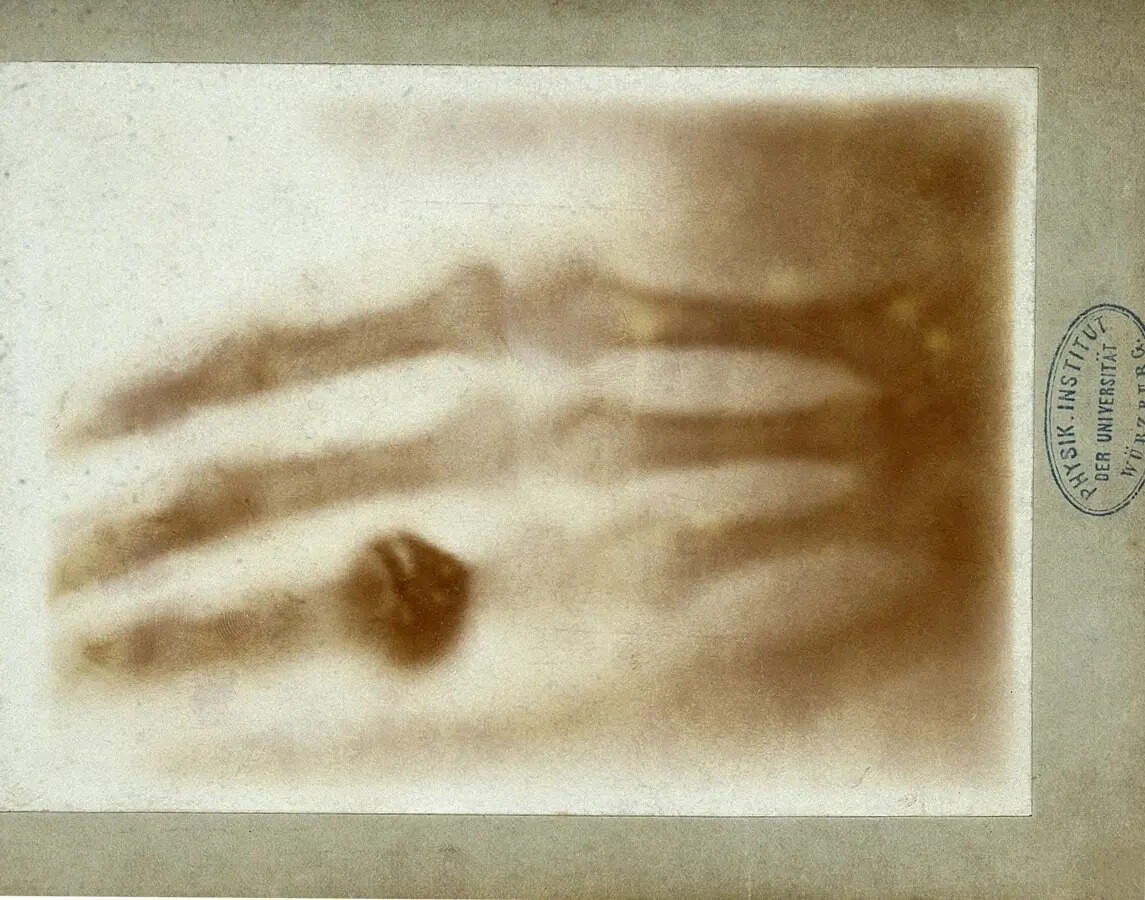
Spotting bones inside a hand for the first time, opened the door to modern radiology. Image credit – Wikimedia
Use of X-rays began at onceOne thing that made the invention so famous was its quick implementation. In accordance with the PubMed overview of the early history of radiology, X-rays became widespread from laboratories to hospitals and surgeries as early as 1896. It quickly became clear that X-rays can assist in identifying bone fractures, bullets, and other damage that is hard to find through physical examination alone. They answered an urgent need for diagnostics, which promoted quick implementation of the invention. Historians noted that there were very few scientific innovations that entered medicine so quickly. X-rays proved their worthiness almost as soon as their potential became known.Discovery transformed the treatment of patientsBefore the discovery of X-rays, doctors used palpation, visual diagnosis, and symptoms in order to identify injuries of the body’s interior. Surgery was needed to confirm any assumptions about it. The introduction of the X-ray technology marked the dawn of a wholly new way of approaching injuries. Physicians gained access to a means of looking into patients’ bodies without invasive surgeries in order to make a diagnosis and select an effective method for treating bone fractures.According to researchers, such an invention paved the way for a new approach to medical practice that is still utilised. It included visualisation first and intervening after, if necessary. With time, the development of new technologies gave rise to CT and fluoroscopy and numerous other forms of imaging techniques that continue to advance in the field of diagnostics. All the above-mentioned innovations utilise the same concept of visualising the interior of a patient’s body without the need for surgeries.The innovation brought about additional risks to patients’As beneficial as the use of X-rays was, there was no knowledge of any risks at first. At times, physicians who used this equipment were unaware of its potential harm. The paper in the Journal of Medical Physics emphasises the fact that guidelines related to the safety of using imaging techniques came much later when professionals started to understand possible side effects caused by radiation exposure.Reasons for the continued significance of the discoveryThis scientific breakthrough is considered important since from the beginning, it was driven by curiosity, rigorous research, and practical application. The observation of a glow in an obscure lab resulted in a device widely used in medical facilities on a daily basis at present.An iconic picture of Mrs Röntgen’s hand is probably one of the most vivid illustrations of this transition stage, when medicine received a means to examine a person’s body without cutting them open. Over a hundred years after the breakthrough made in 1895, medicine has not changed much in its essence.


