









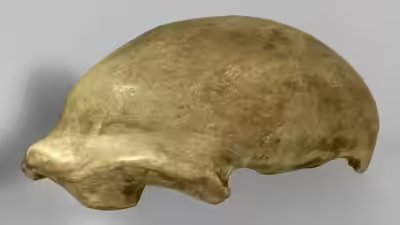
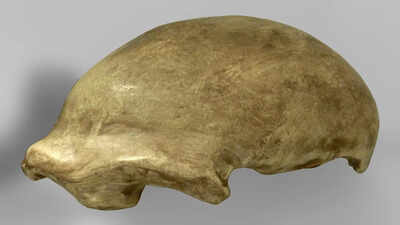
Picture a cave made up of limestone, wet, and dark, situated in the valley of Neander in Germany. The year is 1856, and there are people excavating through the sediment layer in the cave to reach the layer of limestone below it. There are quite a number of heavy bones in the sediment, and among them is a bone which has a brow ridge on it. They were just peculiar bones to the workers, perhaps the bones of a cave bear or an ordinary human suffering from a condition of the bones. Little did they know that what they were discovering was evidence of another type of human.The archaeological dig that led to the discovery of the Neanderthal 1 skull remains is seen as a revolutionary development that developed slowly over time. During this period, the evolution of human beings was still a controversial and debatable process. However, there are researchers who managed to show the existence of evidence of the modern creature, despite the efforts of other researchers to convince them otherwise. It was clear that it was merely an artefact from the time of the ancient people, who inhabited the Eurasian region for many years.Humanity that we don’t knowThe importance of the mentioned finding cannot be underestimated, since it helped to reconsider the attitude towards oneself. For centuries, it seemed that humans were the sole species created by God and existed in isolation from the rest of the creatures on Earth. However, according to the overview, Who were the Neanderthals? published by the Natural History Museum, the discovery made in the Neander Valley proved that the ancestors of contemporary humans were not unique creatures.The discovery changed the account of the growth of science from one of life and death. Neanderthals were not primitive and intellectually inferior beings, as illustrated in the early cultural depictions. They were highly developed beings who used fire, looked after their ill members, and had larger brains than ours. The study of the fossil remains of Neanderthal 1 enabled the development of our present knowledge about human diversity and common origin, which binds everyone inhabiting this planet.
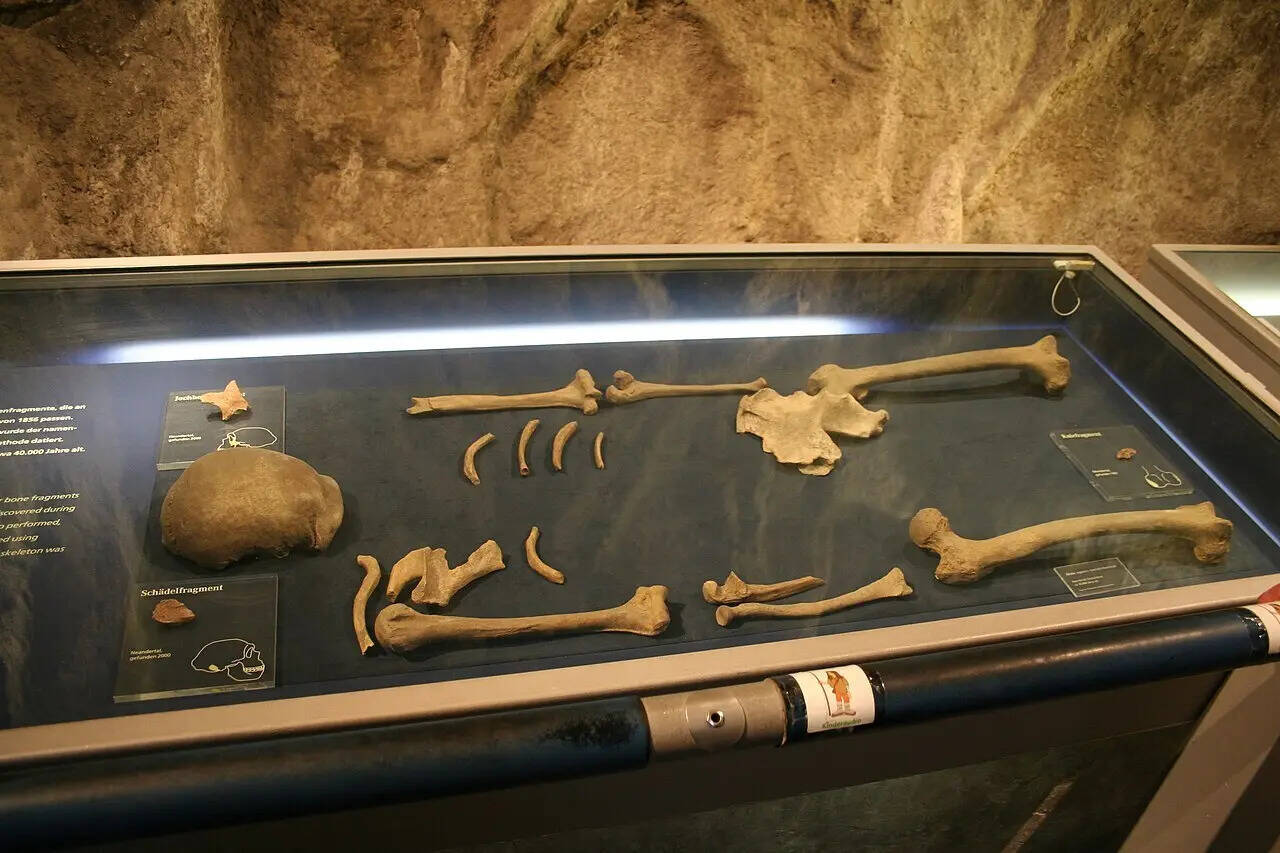
This discovery challenged prevailing beliefs about human uniqueness, proving Neanderthals were advanced beings who interbred with modern humans. Image Credits: Wikimedia Commons
Unearthing the concealed past of our genesAdvances in science, moving from the use of elementary equipment like microscopes to unlocking the secrets of our genome, make the story of Neanderthal 1 increasingly intimate. Instead of regarding them as a “type specimen” confined within a museum box, we must regard them as our own selves. As highlighted by the research released by the Smithsonian Institution on Homo neanderthalensis, modern genetic findings indicate that while anatomically modern humans departed Africa, they came across and interbred with Neanderthals.As a result, for individuals without any African lineage, Neanderthal history can be viewed through a different perspective as the genome of the former is partly contained in the latter’s DNA, ranging from 1% to 4%. The story of the lost human becomes even more interesting in this light. It was not simply a race that disappeared into oblivion; it intermixed with Homo sapiens to some extent. The story now moves from dry archaeology to a humanised lifestyle, which impacts individuals’ physical traits and well-being.The story of Neanderthal 1 starts with a curious finding made by miners in a German quarry. A few bones were all it took to revolutionise how scientists viewed the human family tree completely. The findings show that our ancestry is much richer and more diverse than we ever thought before. Now Neanderthal 1 rests in museums across the world as one of the greatest achievements of science, proving the existence of the people of old caves.It is quite amazing to imagine what would happen if the miners had not been careful enough; perhaps we would be waiting for years to know we have our cousins. One wonders how many other parts of our history have remained hidden underneath the burden of life.


