






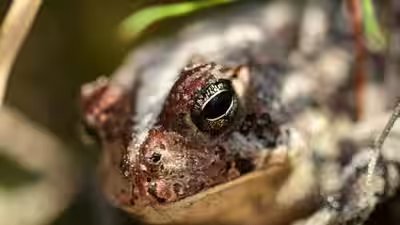
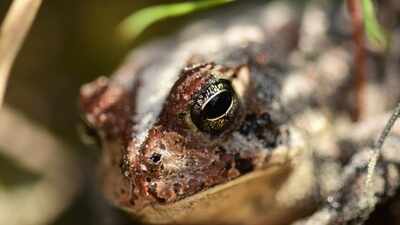
Sometimes, giving wildlife a chance to survive begins with something as simple as opening up your own land to nature. For Jim and Laura Currie, a couple in Mississippi, it was just that. In more than two decades of working with biologists to restore their privately owned land, they have now helped create a home for an increasingly rare animal. The Mississippi gopher frog is listed as Endangered under the US Endangered Species Act and Critically Endangered on the IUCN Red List. Nearly 500 dusky gopher frogs have been released on their property to help protect this rare amphibian in the United States.According to the US Fish and Wildlife Service (USFWS), the release took place in June 2026 at Woodland Cottage, the Curries’ property in Hancock County, Mississippi, as reported on July 29, 2026. The frogs were bred in captivity by the Memphis Zoo before being released into ponds across the restored land. The event was made possible through a collaboration involving the USFWS, the Mississippi Department of Wildlife, Fisheries, and Parks, the Memphis Zoo, Wildlife Mississippi and the couple themselves.
A rare frog
The dusky gopher frog (Lithobates sevosus), also known as the Mississippi gopher frog, is a rare amphibian native to the southeastern United States. Its historical range included parts of Louisiana, Mississippi and Alabama, but habitat loss and environmental changes have caused its population to decline dramatically.Unlike frogs that spend much of their lives around water, dusky gopher frogs spend much of their time underground, seeking shelter in burrows. One animal that provides these shelters is the gopher tortoise, whose burrows offer protection to several other species. The tortoise is considered a keystone species because its digging creates habitats that help support the wider community of wildlife.According to the USFWS, gopher tortoise burrows are used by more than 300 other species, including dusky gopher frogs. This relationship makes the restoration of suitable tortoise habitat particularly important, as the benefits extend well beyond the animal that originally occupied the land.The frogs also have specific breeding requirements. They depend on temporary wetlands and ponds, where females lay their eggs. These breeding sites need suitable vegetation and conditions that allow eggs and tadpoles to develop without being exposed to large predatory fish. The surrounding upland habitat is equally important because the frogs spend much of their time away from the water.
Two decades of bringing back the longleaf pine
The Curries’ conservation efforts began more than 20 years ago, when they started working with organisations including the USFWS Partners for Fish and Wildlife Program, Wildlife Mississippi and the US Department of Agriculture’s Natural Resources Conservation Service.A major part of this work involved restoring the longleaf pine ecosystem, which had suffered considerable losses over the years because of land-use changes, deforestation and the suppression of natural fires.The Curries did not simply plant trees, but worked to bring back previously grazed and clear-cut areas by replanting longleaf pines and restoring grasses and flowering plants.Although deliberately setting fire to land might sound counterproductive when trying to restore a forest, fire is an important part of the natural longleaf pine ecosystem. Periodic, controlled burning helps maintain the open conditions and diverse ground vegetation that many native species depend on.Nearly 500 captive-bred frogs were released into ponds at Woodland Cottage in June 2026. This release has highlighted the conservation effort, but it is only the beginning.Establishing a population requires continued monitoring to understand whether the frogs survive, reproduce and gradually establish themselves in their new surroundings. The USFWS describes the release as an important milestone in a much larger recovery effort involving habitat restoration, captive breeding and cooperation between conservation organisations and private landowners.The Curries’ property has given the frog a second chance at life, helping protect a rare amphibian and providing it with a home. A 20-year-long effort not only made this release possible but also helped restore an ecosystem that other wildlife can benefit from.