








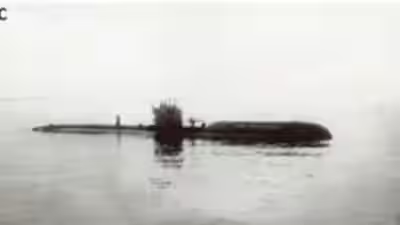
A German submarine that sank off Denmark in 1917 still holds over 4,400 pounds of TNT; scientists find explosive leaking into North Sea after mussels caged on wreck absorb contamination

A German submarine that sank off Denmark’s Rømø island in 1917 is leaking TNT into the North Sea, according to a finding announced by Aarhus University on August 27, 2026. Researchers found the chemical in seawater, sediment and even animals at the site. Blue mussels left for at least 11 weeks at the hull of…

Read Full News

In 2018, EPA began sediment cleanups on Minnesota’s St. Louis River; eight years later, the final project addressed 225,000 cubic yards as the wider cleanup crossed 1.9 million cubic yards

Rivers have always been symbols of movement and sustenance, come what may. But years of industrial activity have polluted the waterway that has supported communities and wildlife.In northeastern Minnesota, the St. Louis River is beginning to tell a different story. A major milestone was reached in May 2026, when the US Environmental Protection Agency (EPA),…

Read Full News

A year after Canada culled more than 300 ostriches on a British Columbia farm over bird flu, the owners are suing, claiming 37 birds are unaccounted for and 1,200 eggs were seized and never returned or paid for

Ostriches are flightless birds, but a question that has now resurfaced is: where did they fly off to? As reported by CBC News, in British Columbia, Canada, a dispute that began with an outbreak of bird flu on an ostrich farm has now found its way into another courtroom, almost a year after hundreds of…

Read Full News

In 2009, researchers found a fossilised leg bone inside Liang Bua cave on Indonesia’s Flores Island; seventeen years later, they realised it belonged to a completely new, extinct species of ground-dwelling bird

For years, a fossil leg bone lay in Liang Bua cave on Indonesia’s Flores Island. The cave is famous for the discovery of Homo floresiensis, a small human relative nicknamed the ‘hobbit’. Although researchers identified it as a bird bone, they set it aside, as studies at the time focused more on mammal remains.Now, almost…

Read Full News

Frogs in Brazil’s Atlantic Forest crashed between 1979 and 1982 and no one knew why; nearly 50 years later, scientists tested over 370 preserved museum frogs and found a killer fungus that was absent before 1979

Brazilian Frog (Image Credit: Canva) The mystery behind the collapse of various civilisations has troubled scientists to this day. The fall of the Indus Valley Civilisation is still not certain, the most we have are multiple theories around it. Similar is the case with the tale behind evolution, decline and extinction of a few animal…

Read Full News

Sariska lost all its tigers to poaching by 2005 and had to bring them back from Ranthambore in 2008; now tigress ST-26 has been filmed with her first two cubs, taking the reserve’s tiger count to 58

While hunting was a prestigious sport for the royals of the older times, their enjoyment cost the ecosystem and its inhabitants in irreversible ways. However, fortunately, the modern world became more conscious about nature and started looking at preserving the balance in natural habitats. This consciousness has provided us with incredible conservation stories, especially in…

Read Full News

Archaeologists found 8,000 frog bones in one Roman-era ditch in England and spent a decade trying to explain them; a new study suggests birds of prey feasted on young frogs around 1,700 years ago

The 8,000 bones reveal how ancient predators, wildlife populations and human activity shaped Roman-era landscapes. An archeological mystery involving thousands of tiny bones has been solved and offers an unusual insight into Britain’s ancient wildlife. What was thought to be an amazing frog graveyard found in a ditch near Cambridge turned out to be the…

Read Full News

The 2,000-year-old machine recovered from a shipwreck: How an ancient Greek device calculated the movements of celestial bodies

A model of the Cosmos gearing of the Antikythera Mechanism. Image credits: History.com The Antikythera Mechanism is a hand-powered Greek device, built roughly 2,100 years ago, as mentioned in an article published in Scientific American in 2022 named ‘An Ancient Greek Astronomical Calculation Machine Reveals New Secrets’. It used interlocking bronze gears to track the…

Read Full News

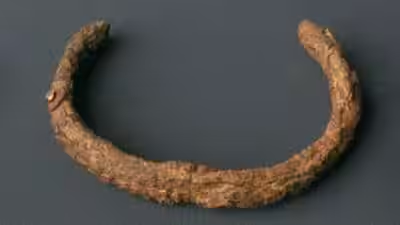
A 3,000-year-old Spanish treasure contains two unusual iron objects; chemical tests suggest they may have been crafted from metal that fell to Earth in meteorites |

PC: Trabajos de Prehistoria Two iron objects found in a Spanish treasure discovered in 1963 may have been made from metal that arrived on Earth from space. The objects, a hollow hemisphere and an open bracelet, form part of the Villena Treasure, a major collection of Bronze Age goldwork found in Alicante, in southeastern Spain….

Read Full News

In 2006, a developer planned more than 200 homes on a 229-acre South Carolina tract bordering a wildlife refuge; after 20 years of opposition, it has agreed to sell the land for permanent conservation

Representative Image (AI-generated) A 229-acre stretch of land in South Carolina that was once intended for a large residential development is now set to be preserved for wildlife and future generations. The property, known as the White Tract, sits next to the Cape Romain National Wildlife Refuge in Awendaw, Charleston County. A proposal to build…

Read Full News