








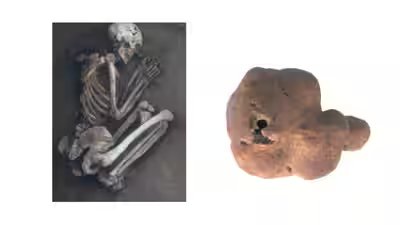
A Bronze Age man buried in a kurgan near the Black Sea about 5,300 years ago had a grape-sized stone in his body, made of a rare mineral linked to infection; scientists say it likely caused him constant pain

(Image credit: Berezina et al. / Archaeological and Anthropological Sciences) Meeting your daily water intake and not holding back your pee are two things you must have been told to do to avoid developing painful kidney stones. But with access to modern medicines and medical procedures today, it is difficult to imagine what a man…
Read Full News

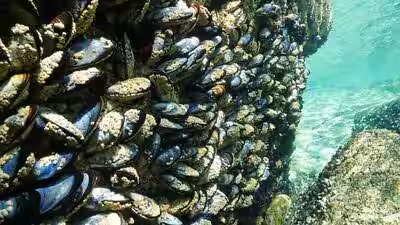
At 1,700 metres beneath the Atlantic, mussels live in darkness and follow the tides; after scientists kept their cells alive in a fridge, those cells shifted from a 12.4-hour rhythm to a 24-hour clock

There can be a striking sense of rhythm in a place where sunlight never reaches and the only changes in the surroundings are brought about by the movement of the ocean. For a species of deep-sea mussel living nearly 1,700 metres under the Atlantic Ocean, this is part of their everyday life. Inhabiting an environment…

Read Full News

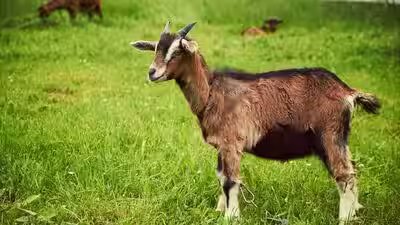
A 7,000-year-old scrap of goat leather from a Spanish burial cave contains DNA closest to the Bermeya, a goat breed still raised in Spain today, suggesting the same lineage has lived in Iberia for millennia

In the hot and dry climate of southern Spain, a 7,000-year-old piece of goat leather has survived to tell a story beyond its material use. Preserved within it are genetic clues to the animal it once belonged to, leading historians and archaeologists to understand the livestock of the time, domestication of goats, and how humans…

Read Full News

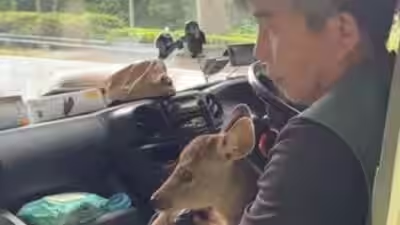
A motorist spotted a severely dehydrated young deer beside a Singapore expressway and called rescuers; after emergency veterinary treatment and overnight monitoring, it was released near where it was found

The motorist spotted a severely dehydrated young deer beside a Singapore expressway (Facebook/Singapore Wildlife Sightings) A young sambar deer found lying beside a Singapore expressway was rescued, treated for severe dehydration and released into a forested area near where it was found the following day. The animal was spotted by a motorist who stopped to…

Read Full News

Meet Daniela Felix, the UK-based designer turning discarded avocado peels into biodegradable shoes using cork, jute, hemp and natural latex, with a design that aims to break down safely after use |

PC: Daniela Felix/LinkedIn Daniela Felix, a designer based in the UK, has developed a biodegradable shoe using discarded avocado peels and other natural materials. It is called BioStride; the footwear concept combines an avocado peel biomaterial with natural cork, jute mesh, hemp thread, and natural latex. The project aims to address the environmental impact of…

Read Full News

Germany backs €20 million project to restore native wildlife, protect Pacific island ecosystems and strengthen climate resilience across Palau, Samoa, Tonga and Wallis and Futuna

Germany is providing €20 million ($23,079,800) to bring native plants and wildlife back to islands in Palau, Samoa, Tonga and Wallis and Futuna. The grant comes from the German Federal Government through its International Climate Initiative (IKI) and will fund a multi-year project called ‘Restoring Pacific Islands for Nature and People’. The initiative will work…

Read Full News

Heavy rainfall could speed up an Alaskan glacier by 215%, with surges lasting up to 66 hours; scientists explain how rainfall accelerates ice flow

Heavy rainfall can push a glacier in Alaska to more than double its speed for a short time, according to new research. Rainfall can accelerate the glacier’s movement by as much as 251%, the study found. Scientists from Boise State University studied Sít’ Kusá, also known as Turner Glacier, and found that rainfall often triggers…

Read Full News

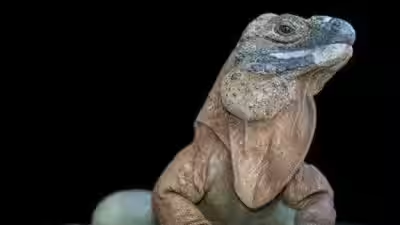
A rare Jamaican iguana was once thought extinct and fewer than 50 survived when it was rediscovered in 1990; after decades of captive rearing and predator control, its 1,000th release is planned for Saturday

A reptile that was once declared extinct is finally approaching a conservation milestone in Jamaica. The country’s critically endangered Jamaican rock iguana, which was rediscovered in 1990 after fewer than 50 individuals were found in the wild, is set to reach its 1,000th head-started release on November 14. The National Environment and Planning Agency (NEPA),…

Read Full News

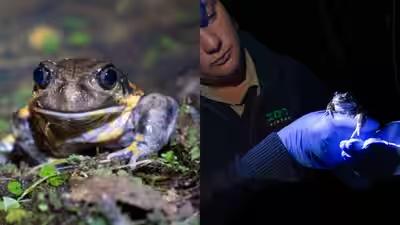
Scientists rescued about 160 tadpoles from the ashes of Australia’s Black Summer fires, raised the rare species in captivity and have now released 53 giant burrowing frogs into the forests where they were found

Native to south-eastern Australia, these elusive frogs inhabit forests stretching across New South Wales and Victoria. Scientists rescued about 160 tadpoles from the ashes of Australia’s Black Summer fires, raised the rare species in captivity and have now released 53 giant burrowing frogs into the forests where they were foundThe aftermath of a devastating wildfire…

Read Full News

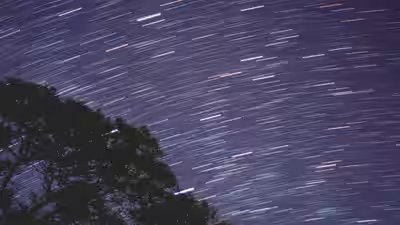
Look to the southeast before sunrise on 15 and 16 November and you can see Mars and Jupiter sitting about 1.2 degrees apart, close enough to spot with the naked eye, no telescope or binoculars are needed

Skywatchers, lose yourself in the sky this November. Three meteor showers are on the calendar, and on the mornings of 15 and 16 November, Mars and Jupiter will sit just 1.2 degrees apart before dawn, close enough to spot without any equipment, according to NASA’s skywatching guidance for the month. A full supermoon follows on…

Read Full News