







In California, gas stoves leaked methane even when switched off. The same gas helps scientists search for life on distant planets |

A gas stove can look completely harmless when its burners are switched off. There is no flame, no heat and apparently no activity at all. But research has found that natural-gas stoves can continue releasing methane (CH₄) even when they are not being used.A study published in Environmental Science & Technology examined 53 homes in…

Read More

New Orleans students turn millions of discarded glass bottles into sand to help Louisiana’s sinking coast

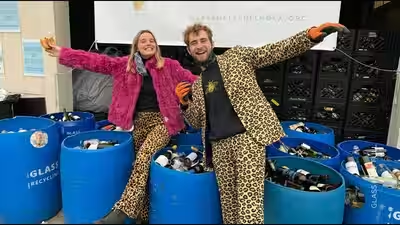
What began as a conversation over a bottle of wine between two Tulane University students has grown into an unusual experiment in recycling and coastal restoration. Franziska Trautmann and Max Steitz, the founders of Glass Half Full, have transformed millions of discarded glass bottles into sand, material that is now being tested to help rebuild…

Read More

A 12,900-year-old cave has opened a window into a forgotten world of hunter-gatherers in Türkiye, revealing ancient fires, stone tools and personal ornaments

Representative Image (AI-generated) In 2019, researchers identified Koskarlı Cave near Trabzon, in Türkiye’s eastern Black Sea region. According to a study published in the journal Antiquity, later excavations at the cave revealed a 12,900-year-old hunter-gatherer layer containing a hearth, stone tools and personal ornaments. The findings provide rare archaeological evidence of human activity in the…

Read More

A Byzantine ship sank off Croatia more than 1,300 years ago; archaeologists have now recovered about 600 grams of gold that points to an imperial passenger

A shipwreck beneath the Mediterranean has recently revealed more gold than any other in the region to date. The vessel sank in the Adriatic Sea in the seventh or eighth century C.E. and its cargo included a gold signet ring likely associated with an emperor along with a gold belt encrusted with gems.More than 40…

Read More

Mexico cleaned over 100K tons of sargassum at the beginning of 2026, but is still facing a seaweed crisis due to the invasive species deeply impacting its tourism

A vast belt of brown seaweed is stretching across the Atlantic Ocean, from the coast of West Africa to the Gulf of Mexico, creating a phenomenon so extensive that it can be tracked from space. Known as the Great Atlantic Sargassum Belt (GASB), it has reached extraordinary proportions in 2026, about 5,000 miles in length.Satellite…

Read More

Astronomers caught the first sign of a star 30 times more massive than the Sun exploding, then tracked its supernova for nearly three months

A combination of images show the evolution of supernova SN 2026gzf, which was first detected by the Einstein Probe on March 21, 2026. Images taken on March 25 and April 3, 2026, show the supernova brightening. An archival image of the host galaxy from March 9, 2016, reveals a bright blue source at the location…

Read More

On This Day in Space: NASA launched the 100-foot Echo 1A balloon on August 12, 1960; the passive satellite reflected telephone, radio and television signals across Earth

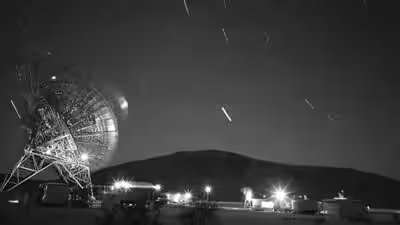
Echo 1 passes over NASA’s Goldstone Tracking Station on August 12, 1960, with the antenna and star trails visible. (Nasa photo) Exactly sixty-six years ago from today, on August 12, 1960, NASA launched Echo 1A, a 100-foot-diameter balloon that became the agency’s first successful communications satellite. Unlike modern communication satellites, Echo 1A did not actively…

Read More