






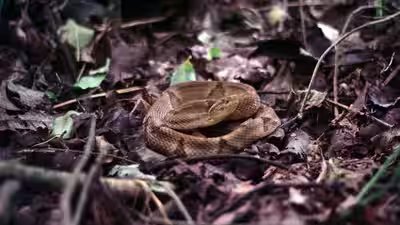
In the 1960s, scientists studying the venom of a Brazilian pit viper found a compound that lowered blood pressure, and it led to captopril, one of the first widely used blood pressure pills, approved in the US in 1981

(Image credit: Wikimedia Commons) Long before modern medical science emerged, nature held answers to healing, protection and healthy living within its bounds. Across several communities and spiritual cosmologies, the natural world has been viewed as the guide for the human world, as have the species that reside in it. Among the myriad spcies that have…

Read Full News

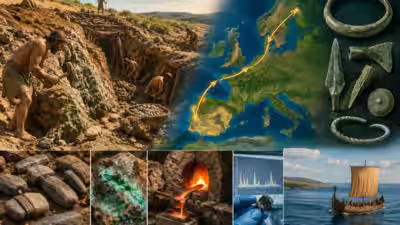
1300 BC: Miners worked a copper vein in Spain with hundreds of stone hammers; more than 3,000 years later, researchers found chemical matches in 11 Scandinavian bronze objects, hinting at a far-reaching trade network

Representative Image (AI-generated) A mine in south-western Spain is offering new clues about how copper travelled across Bronze Age Europe, potentially linking miners in the Iberian Peninsula with communities in Scandinavia thousands of kilometres away. Around 1300 BC, people were extracting copper ore at Las Minillas, using stone tools to work deposits deep underground. Centuries…

Read Full News

Scientists discovered unexpected brine deposits beneath a Pacific fault in 2025, revealing a hidden chemical system that could change how researchers understand earthquakes |

Brine deposits beneath the Gofar fault in the eastern Pacific Ocean gave scientists a never-before-seen electromagnetic image of an oceanic transform fault in 2025, and the result was not what researchers expected. Extremely salty fluid appeared to be trapped under the seafloor on one side of the fault but not the other, pointing to a…

Read Full News

Scientists covered part of a Chinese glacier with fabric to slow melting; ice loss fell by 27% initially but the effect weakened |

A layer of artificial fabric reduced melting on a section of China’s Dagu Glacier by 15% over one year, as per the study. Researchers covered about 500 square metres of Dagu Glacier No. 17 with non-woven geotextile in August 2020 and monitored changes in the ice through October 2021.According to the research published in Remote…

Read Full News

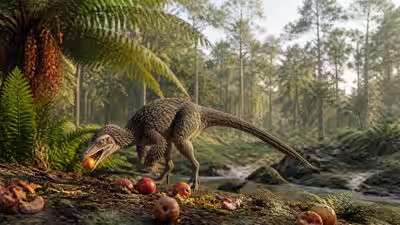
A newly identified bird-like dinosaur from the Cretaceous period may be the first known dinosaur specialised in fruit eating; researchers studied its chewing muscles to reconstruct a diet that differs from the meat and plant foods usually associated with dinosaurs

“In a savage and ever-changing world, some will rise and some will fall. But through it all, the dinosaurs will expand their empire and advance relentlessly to seize Earth’s final frontiers,” narrated Morgan Freeman in the 2026 Netflix miniseries: The Dinosaurs. Nearly 66 million years ago, the Earth as we know it, was transformed, shrouded…

Read Full News

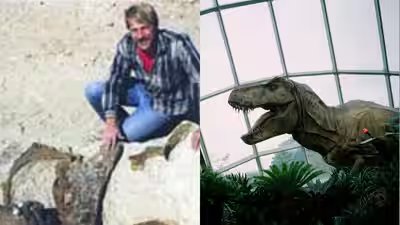
In 1987, an amateur fossil hunter found a T. rex in South Dakota; the $31.8 million skeleton now stands in Abu Dhabi

Stan sacrison found the t rex fossil with a T. rex representative image (BBC) As children watching dinosaur movies, we all became fascinated by the huge and mysterious creature. This fascination led the young and amateur fossil hunter Stan Sacrison to uncover one of the most well-preserved specimens of T.Rex ever found.Imagine walking across a…

Read Full News

Taking antibiotics? Eating a lot of sugar at the same time may make the damage to your gut worse, scientists have found, suggesting that what you eat during a course of antibiotics could affect how well your body recovers

Impact of sugar on the antibacterial course Craving while being unwell is real: the distaste of medicine, bitter pills and syrups. At that moment, we just want to eat something good. While the disease is already making us suffer, the restrictions on our diet make recovery almost not worth it anymore. And we end up…

Read Full News

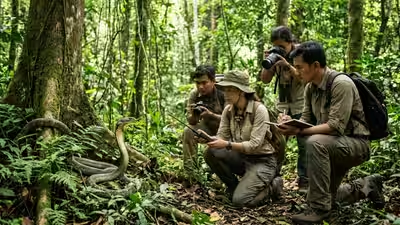
In 2025, scientists examined three king cobra encounters in Thailand, revealing a little-known side of the venomous snakes that had long been missing from scientific research |

Two male king cobras meeting during the breeding season may engage in a prolonged contest, using their bodies to wrestle for control rather than relying on the venomous strikes associated with these snakes. The behaviour has long been recognised in accounts of king cobras, yet detailed scientific descriptions have been scarce. In Thailand, observations made…

Read Full News

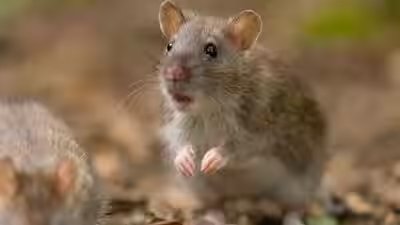
In 2018, Antipodes Island was declared free of invasive mice; eight years later, scientists reported ground beetle numbers 40 times higher, with rove beetles up more than 20-fold after predator removal

When conservation teams confirmed in 2018 that invasive house mice had been removed from Antipodes Island, it marked the end of one of New Zealand’s most ambitious island restoration efforts. The remote subantarctic island had carried mice for more than a century, and their appetite for insects, seeds, plants and occasionally bird eggs had quietly…

Read Full News

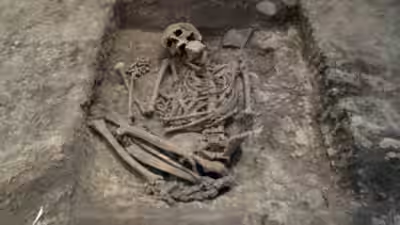
He was buried beneath a hearth, with a large stone pressed against his mouth and face, just one cm below the floor people walked on; researchers now suggest the 3,700-year-old burial was part of a magical ritual, not a punishment

A man buried beneath a hearth in southeastern Spain nearly 3,700 years ago may have been subjected to a ritual intended to suppress supernatural forces rather than simply punish or humiliate him, according to a new archaeological study. The man’s face was positioned just one centimetre below the floor of a large hall, while a…

Read Full News