






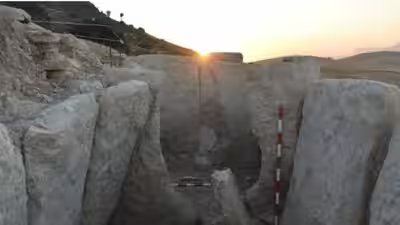
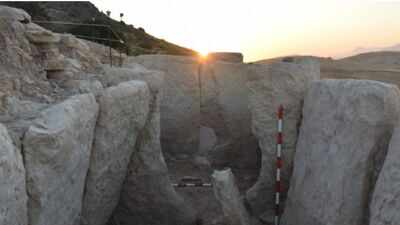
Archaeologists working near Teba in Málaga, southern Spain, have uncovered a remarkably well-preserved megalithic tomb that is more than 5,000 years old. Announced by the University of Cádiz, the structure, known as Dolmen I of the La Lentejuela necropolis stretches about 13 metres, or roughly 42 feet, and contains multiple burial compartments, human remains and an impressive collection of grave goods.The discovery offers more than a glimpse into ancient burial customs. The ivory, amber, seashells and carefully crafted flint objects found inside suggest that prehistoric communities in southern Iberia were connected to wider networks of exchange. These objects also reveal that materials carrying symbolic or prestige value could travel long distances across the region during the third millennium B.C.E.A monumental tomb in exceptional conditionThe dolmen was excavated during four archaeological campaigns led by Eduardo Vijande and Serafín Becerra of the University of Cádiz’s Thalassa research group. Researchers describe it as one of the most monumental and complete funerary structures identified in Andalusia.The tomb was built using large upright stone slabs, known as orthostats. Some of these stones stand more than two metres high, creating a substantial chamber that would have required considerable planning, labour and cooperation to construct. The monument was later covered with large horizontal stones and sealed beneath a mound, or tumulus, made from sand and small rocks.That layered construction helped protect the interior for thousands of years. Although the site has endured immense changes in the surrounding landscape, the tomb’s structure remains sufficiently intact for archaeologists to study its layout and contents in detail.Serafín Becerra said the site could be regarded as one of the most monumental and best-preserved dolmens in Andalusia. Project co-director Eduardo Vijande added that the structure’s condition could allow researchers to learn more about the lifestyles, rituals and beliefs of the communities who built and used it, as per reports.A burial place used by generationsInside the monument, archaeologists identified several internal compartments referred to as ossuaries. These spaces contained the remains of deceased individuals, indicating that Dolmen I was likely a collective burial site rather than a tomb built for just one person.The arrangement suggests that the monument may have been used repeatedly over time. Bodies or bones could have been placed inside during different burial ceremonies, allowing the tomb to serve a community across several generations.The collective tombs were not simply utilitarian spaces to dispose of the dead. They may have helped to maintain links between living communities and their ancestors in prehistoric societies. The continued use of one monument could also reinforce family identity, social belonging and claims to a particular landscape.The compartments and their arrangement may eventually help researchers determine how different individuals were treated after death. Archeologists will look at the position of the remains, the relation between burial deposits and objects, and whether the tomb was changed or extended during its use.Distant ties revealed by exotic materialsSome of the most important finds are items made of ivory, amber and seashells. These materials were not easy to find in the inland area around Teba, which makes their presence all the more important.Seashells, in particular, suggest that coastal materials travelled inland through exchange networks. Juan Jesús Cantillo, a University of Cádiz prehistory professor involved in the project, said their presence reflects the importance of the sea as a symbol of prestige and points to long-distance connections.Amber provides another clue. Archaeological research has documented the movement of amber resources through extensive Mediterranean exchange networks during late prehistory. The material may have been valued for its colour, sheen or rarity, and its appearance in a burial context suggests it could have carried social or ritual importance.The ivory pieces are equally fascinating. Ivory was a valuable raw material, which could be carved into ornaments or other symbolic objects. Further archaeometric analysis will need to be carried out by researchers to determine the material’s origin and how it arrived in southern Spain.These finds challenge the outdated image of prehistoric communities as isolated groups with little contact beyond their immediate surroundings. Instead, they suggest that people living in inland Iberia participated in systems that moved materials, objects, ideas and cultural practices across considerable distances.Tools, weapons and signs of statusThe tomb also contained sophisticated flint artefacts, including arrowheads and large blades. One of the most unusual objects is an exceptional halberd, a weapon resembling a large axe or blade mounted on a shaft.The halberd may have been used in combat, hunting or ceremonial activity, although its exact purpose remains uncertain. Its position within a collective tomb could suggest that certain objects were linked to social status, leadership or specific identities of the community.Grave goods are not always the everyday possessions of the dead. Possibly some were made especially for burial rites or put into the grave as gifts. Others may have been personal possessions that were used in life and then chosen to accompany the dead.By looking at wear patterns, methods of manufacture and the context of each find, researchers hope to determine whether the artifacts were heavily used, deliberately placed or created for symbolic reasons.What the dolmen reveals about prehistory To construct a 13-metre stone monument needed more than brute strength. The community had to find and move large stones, organize workers, plan the structure, and maintain shared traditions about the treatment of the dead.This sort of coordination implies a society with well developed communal systems, and perhaps developing status differences. Not everyone had equal access to exotic materials or elaborate weapons. The objects could therefore help researchers investigate how social roles and hierarchies developed in southern Iberia.The monument also reveals how people connected the landscape, the living community and the world of the dead. A visible stone tomb covered by a mound could have served as a sacred location, a gathering place or a marker of territorial identity.Dolmens were not limited to Andalusia. Similar megalithic structures appeared across parts of Europe and Asia, sometimes functioning as tombs, ceremonial spaces or prominent landmarks. Spain’s Dolmen of Guadalperal, often called the “Spanish Stonehenge,” and England’s 5,000-year-old Arthur’s Stone are among the better-known examples.The research is only beginningThe University of Cádiz project is supported by Teba Town Council, the Palarq Foundation and university resources. It also serves as a training opportunity for History students learning archaeological fieldwork and excavation methods.Further laboratory analysis could provide additional information about the people buried inside Dolmen I and the objects placed alongside them. Researchers may be able to investigate the origin of the ivory and amber, identify manufacturing techniques, examine residues and study the health, diet and movement of the individuals.For now, the discovery has already established the importance of La Lentejuela. The tomb is not merely an ancient stone structure filled with artefacts. It is evidence of a connected, organised and symbolically rich society that existed in southern Spain more than five millennia ago.The seashells, amber and ivory suggest that the people buried there belonged to a world far larger than their immediate surroundings. Long before written records, roads or modern cities, communities were exchanging valuable materials across inland and coastal regions, and preserving their beliefs in stone.


