Headlines

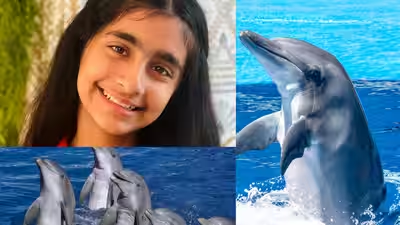
Meet Ishanvi Sakharpe, the Virginia student who built Dolphin Guard to help protect dolphins from dangerous human activity |

Image(s): Young Science Lab/Canva Ishanvi Sakharpe is a Virginia student using science and technology to address a problem affecting one of the ocean’s most recognisable animals. Her project, Dolphin Guard, was created with the aim of helping protect dolphins from dangerous human activity in marine environments. The young innovator’s work has now earned recognition through…

Read More

Oysters can carry a bacterium that can be deadly to humans without getting sick; scientists found how it survives inside them |

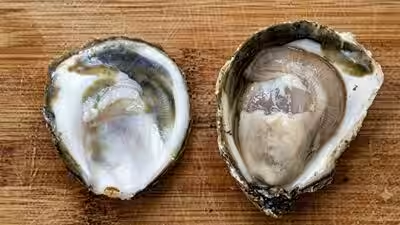
PC: By Taishonambu/Wikipedia Oysters can carry a type of bacteria that can cause serious and sometimes deadly infections in people, yet the shellfish can carry the microbe without showing the same kind of illness. The organism is Vibrio vulnificus, an estuarine bacterium that can become closely associated with American oyster tissues. Researchers have found that…

Read More

An 86-year-old Pennsylvania farmer was offered $15.7 million for 261 acres but chose $1.9 million to protect the land from development |

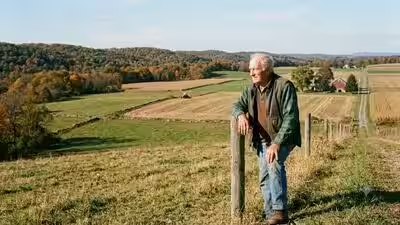
At 86, Mervin Raudabaugh had a decision to make over 261 acres of Pennsylvania farmland he had spent decades working. The land had caught the attention of data-centre developers, who reportedly put forward offers exceeding $15 million, including one estimate of about $60,000 an acre. On paper, it was the kind of figure that could…

Read More

A Spanish vineyard has gone more than 20 years without irrigation or pesticides; its cover-cropped topsoil now has over twice the organic matter of nearby tilled soil

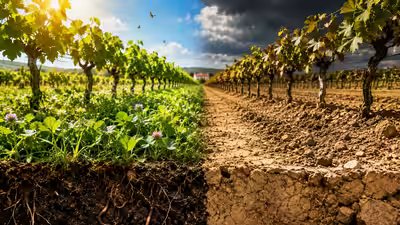
Representative Image (AI-generated) For more than two decades, the soil between rows of grapevines in a Spanish vineyard has remained covered with spontaneous vegetation instead of being repeatedly tilled. The unusual approach was associated with a striking difference beneath the vines: soil managed with long-term vegetation cover contained more than twice as much organic matter…

Read More

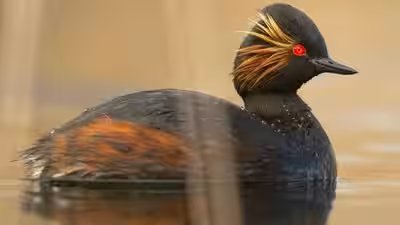
An English dumping ground for canal dredgings was restored as wetland; black-necked grebes rose from 4 breeding pairs to 35 in two years, and it now holds 64% of the UK population

Woolston Eyes in Cheshire recorded 35 breeding pairs of black-necked grebes in 2025 (Photos: RSPB) A former dumping ground for dredged material from the Manchester Ship Canal has been transformed into a wetland. The wetlland has now become the most important breeding site in the UK for the rare black-necked grebe.According to the Royal Society…

Read More

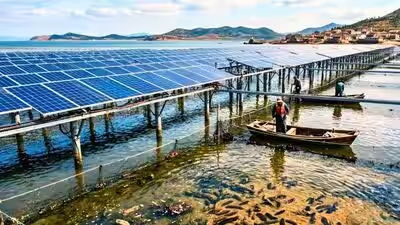
China covered 40% of sea cucumber ponds with solar panels; younger animals spent 12 fewer days in summer inactivity |

Solar panels are usually associated with electricity, but a study in China has found that they can also change the summer conditions inside sea cucumber ponds. Researchers examined ponds fitted with photovoltaic panels and found that the shade reduced the amount of light reaching the water and lowered its temperature. The cooler conditions were linked…

Read More

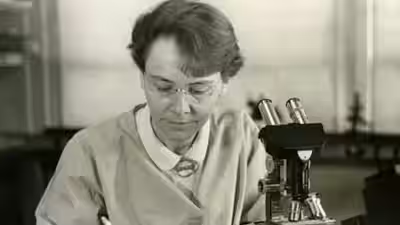
Quote of the day by Barbara McClintock: “If you know you are on the right track, if you have this inner knowledge, then…” |

There are moments when pursuing an idea can feel lonely, particularly when other people cannot see what you see. Barbara McClintock understood that feeling well. The American geneticist spent years investigating patterns in corn genetics that initially challenged the scientific thinking of her time. Her words are not simply about refusing to listen to criticism….

Read More

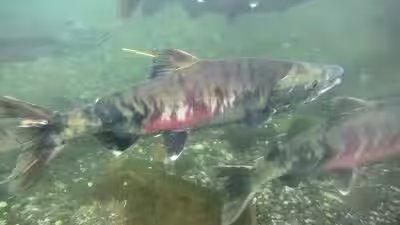
In the early 1990s, fewer than 1,000 threatened chum salmon returned to this Washington watershed; recent returns average 32,600 a year as a $9.7 million river restoration nears completion

chum salmon Representative image In the early 1990s, fewer than 1,000 threatened summer-run chum salmon made it back to the Big Quilcene River on Washington’s Olympic Peninsula each year. Decades of logging, road building and habitat degradation had left the river choked with sediment, its gravel spawning beds buried and its side channels disconnected. Today,…

Read More

Researchers analysing hardened plaque from eight people buried in Edo-era Osaka detected 38 dietary proteins, including luxury red sea bream and cold-water fish imported through Japan’s shipping networks

Nearly 400 years ago, people living in Osaka had no refrigerators, supermarkets or modern food supply chains. Yet an unusual scientific discovery suggests that their diets were far more varied than expected. Researchers analysing hardened dental plaque from eight people buried at the Umeda cemetery in Osaka identified 38 dietary proteins from 17 types of…

Read More