





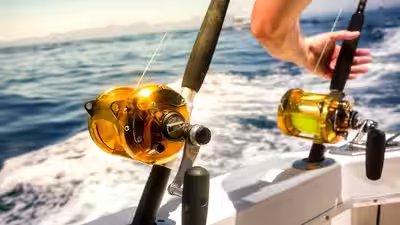
Southern California anglers are catching unusually large fish rarely seen this far north as Pacific waters warm

Southern California anglers are seeing an unusual number of warm-water fish as rising ocean temperatures linked to El Niño and marine heatwaves bring species typically found farther south into local waters.Fishermen working in Marina del Rey and Santa Monica are catching fish species, in larger sizes, that are rarely seen in the area. Tony Villanueva,…

Read More

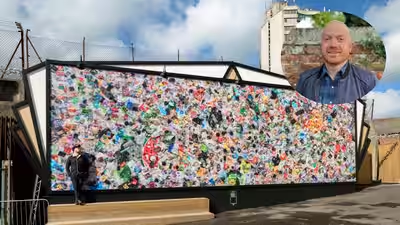
A man collected every piece of plastic he threw away for a year, 4,490 pieces later, his experiment became a movement to reduce everyday plastic waste |

A man who decided to keep every piece of plastic he threw away for an entire year ended up with a collection of 4,490 pieces, turning a simple personal experiment into a wider effort to reduce everyday plastic waste. Instead of allowing wrappers, packaging and other discarded items to disappear into the bin, he saved…

Read More

In 2010, Thailand sank 25 retired battle tanks into the Gulf to rebuild fishing grounds; 9 years later, researchers found 53 fish species

Almost 10 years after the tanks went under, researchers from Ramkhamhaeng University in Bangkok did some diving to see what had grown up around the man-made reef sites. Battle tank is made for war. It is built to cross tough terrain, take a beating and dominate a battlefield. But what if the battlefield disappears and…

Read More

Scientists mixed waste coffee grounds with oyster shells to create a stronger construction material from two food wastes |

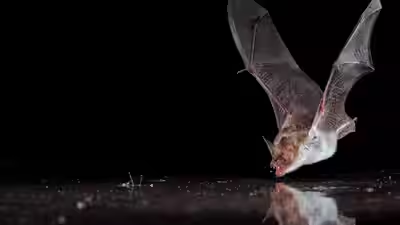
Waste coffee grounds and discarded oyster shells could be turned into a useful construction material. The mixture used spent coffee grounds (SCG) as its main filler, with oyster shells added to strengthen the granular structure and GGBS-based alkali-activated materials used as the binder. Because SCG particles are highly compressible, the researchers added oyster shells in…

Read More

Scientists reconstructed a Wyoming forest from 56-million-year-old fossil leaves; it lost about 60% of its canopy during ancient warming and took more than 100,000 years to recover

Wyoming tetons Representative image from Canva Deep in the rock record of Wyoming, a layer of fossil leaves tells a quiet but powerful story about what happens to forests when the planet warms rapidly. About 56 million years ago, during a spike in global temperatures known as the Paleocene Eocene Thermal Maximum (PETM), a lush…

Read More

In 1953, North and South Korea established a demilitarised zone; decades later human isolation led to the formation of a 155-mile-long wildlife haven

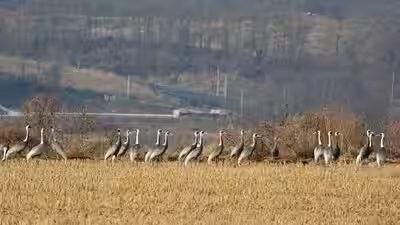
Soldiers on both sides stand behind fences and in between are thousands of landmines. For more than 70 years, humans have not ventured into a 155-mile-long corridor that divides two nations, North and South Korea. While boundaries and borders can ward people off, nature is above all such regulations. This is probably why a space…

Read More

Scientists are using worms that eat human waste to turn toilet waste into compost, but parasitic eggs can survive the process |

Tiger worm toilets are designed to turn human waste into vermicompost using worms that feed on and break down organic material. The approach can reduce the amount of waste that builds up in a toilet and has been studied as a form of non-sewered sanitation. Researchers tested whether tiger worms could destroy Ascaris eggs under…

Read More

Meet Luke Carpenter-Bundhoo, the Australian ecologist who found an ancient ‘vegan Dracula’ fish 900 miles beyond its known range |

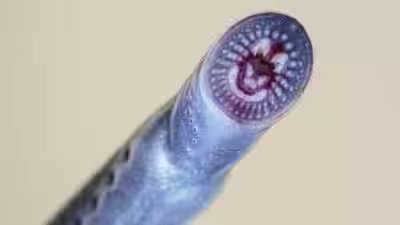
Australian brook lamprey. Image Credit: David Moffatt In 2022, Australian ecologist Dr Luke Carpenter-Bundhoo set out to study how the Black Summer bushfires had affected ecosystems in K’gari, Queensland. Instead, while surveying a creek, he encountered an unexpected creature: an eel-like fish with seven gills and a mouth lined with circular rows of teeth. The…

Read More

Meet Patrick Urban: The German dung beetle specialist who found a species never known to science among collected beetles |

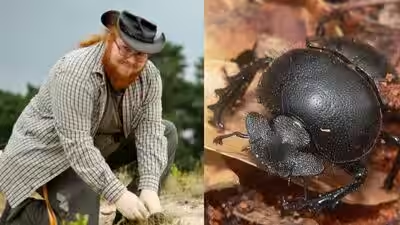
PC: University of Nebraska–Lincoln From university laboratories in Germany to beetle specimens collected from dung in China, Patrick Urban’s career has focused on insects that are easy to overlook. The German biologist specialises in dung beetle taxonomy and ecology, with particular attention to the Onthophagini group found across the Palearctic and Indomalayan regions. His work…

Read More