






After losing about 140.5 billion tons of ice a year for two decades, Antarctica temporarily reversed course, gaining a record 695 billion tons in 2021-23 as tropical warmth drove heavy snowfall

Representative Image (AI-generated) Antarctica has been losing mass for years as glaciers shed ice into the ocean, contributing to rising sea levels. But between 2021 and 2023, the continent experienced an unusual and temporary reversal. Instead of continuing to lose mass at its recent rate, Antarctica gained about 695 billion tonnes over 22 months, marking…


Read More

Princeton put AI in charge of a fusion-plasma control loop running every 20 milliseconds; in one test it predicted a damaging instability 200 ms early and stopped it before it began

Nuclear fusion illustration Photo: Canva Inside a steel vault at the Princeton Plasma Physics Laboratory, a superheated whirl of charged particles spins in near vacuum, held in place by invisible magnetic fields. This is a fusion plasma, the same kind of matter that powers the Sun, and it is notoriously difficult to control.In a recent…

Read More

China’s ‘Snake Doctor’ continues conservation work for a rare viper, despite 9 snake bites, divorce threat from wife and even after losing a finger |

Chen Yuanhui. Image Credit: South China Morning Post Chen Yuanhui has spent more than four decades studying one of China’s rarest venomous snakes, even though his work has cost him part of a finger and repeatedly put his life in danger. The 77-year-old, widely known as the ‘Snake Doctor,’ discovered the ‘Mangshan pit viper’ and…

Read More

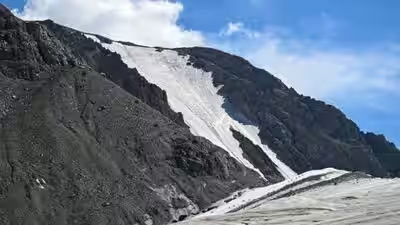
In 2018, scientists seeded clouds over China’s Muz Taw Glacier to make snow; the brighter surface was followed by 14% to 17% less ice loss in a preliminary experiment

This photo taken on Aug. 10, 2026 shows a view of the Muz Taw Glacier in Altay, northwest China’s Xinjiang Uygur Autonomous Region (Photos: Xinhua net) Researchers in China have tried to make artificial snow over China’s Muz Taw Glacier to slow its melting. The experiment conducted in 2018 involved seeding clouds with silver iodide,…

Read More

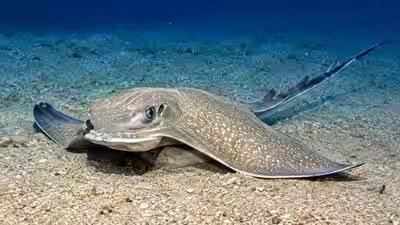
More than 100 eagle rays gathered around a tuna farm off Malta; scientists say it is the largest aggregation of the species ever recorded |

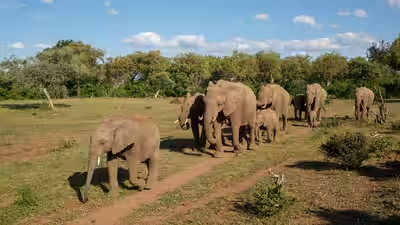
Picture of Myliobatis aquila. Image Credit: Wikipedia More than 100 ‘eagle rays’ were recorded gathering around a tuna ranch off the north-eastern coast of Malta. Scientists believe it is the largest aggregation of the species ever recorded. The remarkable sighting was captured during routine underwater monitoring in October 2024, when a remotely operated vehicle surveyed…

Read More

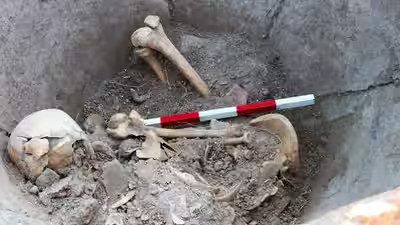
A man climbed inside a giant Roman storage jar around 1,600 years ago and never came out; archaeologists think they know what he was hiding from

Archaeologists have uncovered skeleton inside the jar at the ancient Roman colony of Deultum (Image Credit: Archaeologia Bulgarica via Live Science) More than 1,600 years ago, as violence swept through a Roman settlement in what is now Bulgaria, a man appears to have made a desperate attempt to survive. He climbed inside a huge ceramic…

Read More

Two Canadian students created toothpaste that changes colour in the mouth; their school project is designed to show children when they are brushing properly |

Image Credit: AI Generated Two Canadian students have developed a colour-changing toothpaste designed to make toothbrushing easier for children to understand. Ella Zhang and Gillian Leung, students at Havergal College in Canada, created ‘ToothTint’ as a school project that uses a natural pigment to change colour in response to conditions inside the mouth. The idea…

Read More

Meet Dr Alberto Cruz: The palaeontologist who found a new Ice Age toad hiding in a 1950s La Brea fossil collection |

PC: California’s La Brea Tar Pits & Museum A small Ice Age toad hidden in the collections of California’s La Brea Tar Pits has emerged as a new species to science, giving researchers another way to read the environmental history of ancient Los Angeles. ‘Spea labreae’, the extinct spadefoot toad, was identified when Dr Alberto…

Read More

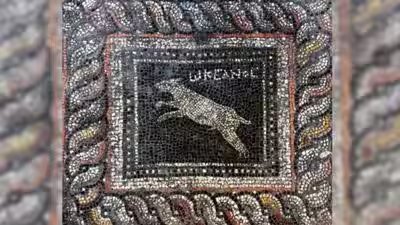
Around 1,800 years ago, a Roman household decorated its floor with a cat named ‘Emerald’ and a dog named ‘Ocean’; archaeologists have now uncovered the mosaic

A panel of the mosaic depicts a dog named Ocean. Around 1,800 years ago, a Roman household in what is now Turkey decorated the floor of its home with a detailed mosaic showing animals and mythological figures. Among them were a cat and a dog whose names were written beside their images. Archaeologists have now…

Read More