




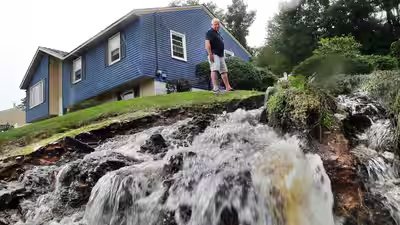
In 1999, scientists dropped 45 tons of wollastonite over a 29-acre New Hampshire watershed to replace calcium lost to acid rain; by 2013, it was exporting 30 times more inorganic nitrogen than nearby watersheds

In 1999, scientists dropped 45 tons of wollastonite over a 29-acre New Hampshire watershed A large-scale effort to restore an American forest damaged by acid rain had an unexpected environmental effect when added nutrients caused a huge increase in nitrogen flowing into nearby streams. In October and November 1999, researchers spread about 45 short tons…

Read More

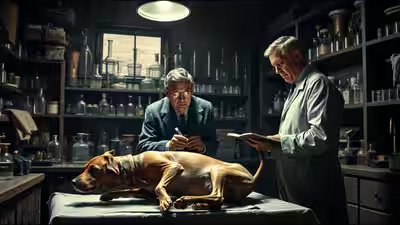
In 1921, a young Canadian doctor experimented with starving dogs; one dog’s dramatic reaction helped lead to the discovery of insulin |

Representative Image of Frederick Banting and Charles Best conducting early diabetes research in a laboratory with dogs (AI-generated image) In May 1921, Frederick Banting arrived at the University of Toronto with an idea about diabetes and little laboratory experience. Professor John J.R. Macleod gave him space in the physiology department, several dogs and Charles Best,…

Read More

Meet Kaia Minn, the 13-year-old Massachusetts inventor who turned discarded orange peels into biodegradable seed pods for reforestation |

Kaia Minn at the National Academy of Inventors conference. Image Credit: kaiaminn.com A discarded citrus peel is not the sort of thing most people would associate with restoring forests. But for 13-year-old Massachusetts inventor ‘Kaia Minn,’ it became the starting point for a simple idea with potentially far-reaching environmental uses. Minn has developed a ‘biodegradable…

Read More

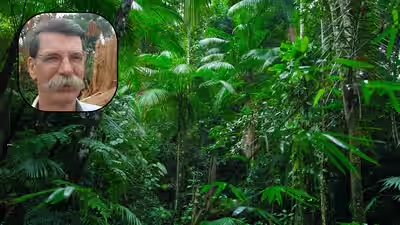
He began studying the Amazon in the 1970s; 50 years later, Philip Fearnside’s research has calculated the costs of losing the Amazon on account of deforestation, dams and highways

Philip Fearnside’s research has calculated the costs of losing the Amazon on account of deforestation, dams and highways The Amazon rainforest has been described in terms of its enormous size, biodiversity and importance to the global climate. But for Philip Fearnside, understanding the forest has also meant asking a more practical question: what does it…

Read More

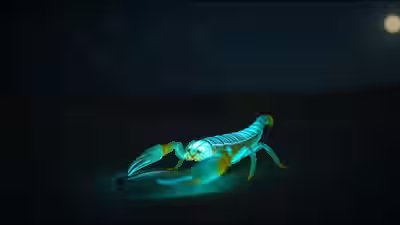
In 1945, an Arizona professor started hunting glowing scorpions at night; decades later his laboratory had become a major centre for venom research |

​Representative Image of fluorescent scorpions glowing across a desert landscape after dark (AI-generated image) In 1945, an Arizona State University professor began wandering the desert at night, hunting scorpions that glowed under his black light, and few people around him understood why. That professor, Herbert L Stahnke, was already the nation’s leading authority on scorpions…

Read More

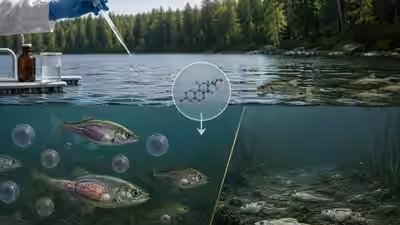
In 2001, scientists began adding 5 to 6 nanograms per litre of synthetic estrogen to an Ontario lake; after 2 seasons its minnow population collapsed

Representative Image (AI-generated) A tiny concentration of a synthetic hormone was enough to trigger a dramatic ecological change in a remote Ontario lake. In 2001, scientists began adding the synthetic estrogen 17α-ethynylestradiol (EE2) to Lake 260 in northwestern Ontario, maintaining concentrations of about 5 to 6 nanograms per litre. The experiment continued for seven years,…

Read More

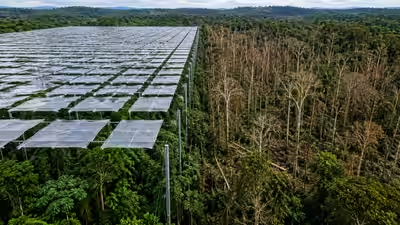
Scientists covered an Amazon rainforest plot with 6,000 panels to block half its rain; large trees died and biomass fell by a third |

Deep in the Caxiuanã National Forest in northern Brazil, a patch of rainforest the size of a football pitch tells the story of what a drier Amazon might look like. Since 2002, scientists have suspended nearly 6,000 transparent plastic panels above one hectare of pristine forest, diverting roughly half the rainfall away from the soil…

Read More

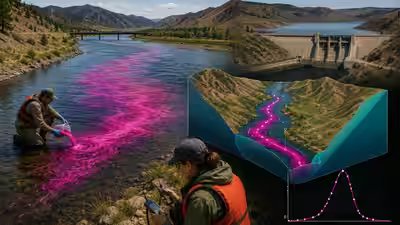
In 2010, US scientists released dye into Montana’s Missouri River and tracked it across 41.2 miles; one reservoir held the plume for 8.2 hours, helping predict chemical-spill timing

Representative Image (AI-generated) A river can carry a contaminant far beyond the point where it enters the water, but predicting exactly how quickly that material will travel is not always straightforward. In 2010, scientists with the U.S. Geological Survey (USGS), working with the Montana Department of Environmental Quality, conducted a dye-tracing experiment on a 41.2-mile…

Read More

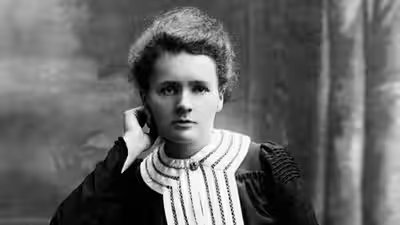
Quote of the day by Marie Curie: “I have no dress except the one I wear every day. If you are going to be kind enough to…” – a timeless lesson on choosing purpose over appearance |

Quote of the Day by Marie Curie Marie Curie is remembered as one of the most important scientists in modern history, yet a single letter from 1895 offers a genuinely striking glimpse into her real priorities. Ahead of her marriage to Pierre Curie in July that year, someone had offered to give her a wedding…

Read More