






San Diego’s Leanne Fan, 18, built a device to simulate microgravity and tested red light on injured flatworms; tissue regeneration sped up by 95.2%, helping her win $80,000

Fan built her own $200 device instead of using NASA’s $50,000 clinostat. (Society for science photo) Leanne Fan, an 18-year-old student from San Diego, has been named a finalist in the 2026 Regeneron Science Talent Search for her research into wound healing in space. Her project looks at whether red light therapy can help wounds…

Read More

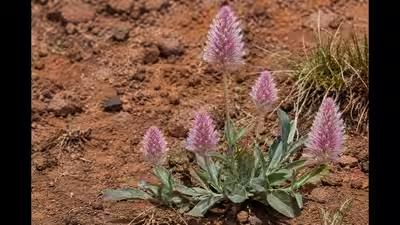
A rare Australian plant last recorded in 1967 has been found alive in remote Queensland after nearly six decades

A rare Australian plant last recorded in 1967 has been found alive in remote Queensland after nearly six decades (Image: AI Generated) A small Australian shrub that had effectively disappeared from the scientific record for nearly six decades has been found alive in a remote part of northern Queensland. Ptilotus senarius, a species known from…

Read More

University of Texas researchers turn everyday biomass into a machine that makes water from air

What if food scraps, discarded branches and seashells could help produce drinking water from the air? Researchers at the University of Texas at Austin have developed a new class of biomass-based hydrogels that can capture atmospheric moisture and release it as clean water using relatively mild heat. The approach, described in the peer-reviewed journal Advanced…

Read More

In 1948, scientists left a giant fossil on an Arctic island because they could not carry it; 78 years later it became a record-size new predator

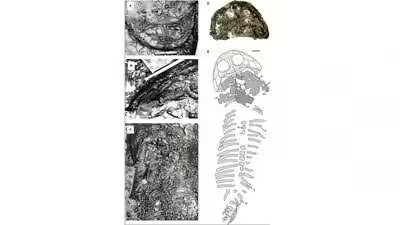
The fossil of Arctobatrachus urdensis as documented in 1948 (A–C), its skull as it appears today (D), and a reconstructed illustration (E). Scale bar: 10 cm. Credit: Schoch et al., 2026. Nearly 80 years ago, a British expedition discovered the battered remains of a giant fossil on the peak of an Arctic island. Unable to…

Read More

Fur traders introduced Arctic foxes across Alaska’s Aleutian Islands to produce pelts; by killing seabirds, the foxes helped turn lush grasslands into tundra

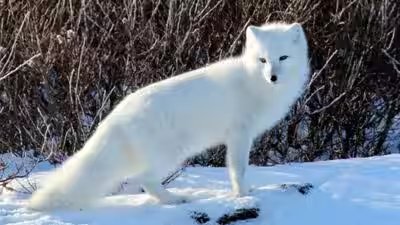
The foxes reduced seabird populations, which meant less nutrient-rich guano reached the islands. Arctic foxes introduced to more than 400 Alaskan islands for fur changed far more than the local wildlife. According to a study published in journal Science, by preying on seabirds, they disrupted the flow of nutrients from the ocean to land and…

Read More

In 1962, Oklahoma researchers gave 14-year-old elephant Tusko 297 mg of LSD, the largest single dose ever administered; he collapsed within five minutes and died 100 minutes later

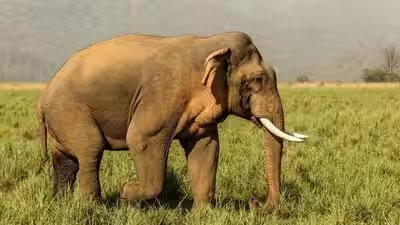
An elephant in musthPhoto: Canva In the annals of controversial scientific experiments, few stories are as disturbing as that of Tusko, a 14-year-old Indian elephant at the Oklahoma City Zoo. On August 3, 1962, Tusko became the subject of an experiment that would go down in history as one of the most infamous animal studies…

Read More

A skeleton found beneath Scotland’s Stirling Castle had more than 160 fractures; researchers say it is the first confirmed death from a trebuchet

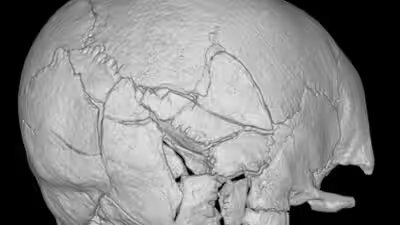
The 14th century warrior’s skull was broken in 61 places. (University of Bradford photo) A skeleton uncovered beneath Scotland’s Stirling Castle may be the first confirmed archaeological evidence of a person killed by a trebuchet. Known to archaeologists as Skeleton 150, the remains belong to a defender who appears to have been killed during a…

Read More

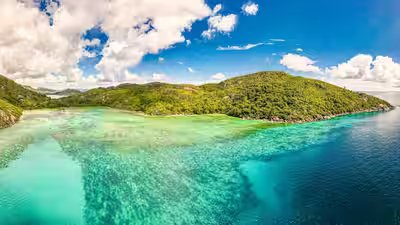
In 1987, a British naturalist became the first professional warden of a remote Seychelles island; a year later 29 endangered warblers were moved there and established a new population

In 1987, a British naturalist became the first professional warden of a remote Seychelles island In 1987, British naturalist Ian Bullock arrived on remote Aride Island in the Seychelles to become its first professional warden. Just one year later, the groundwork he established helped make possible an important conservation project: 29 endangered Seychelles warblers were…

Read More

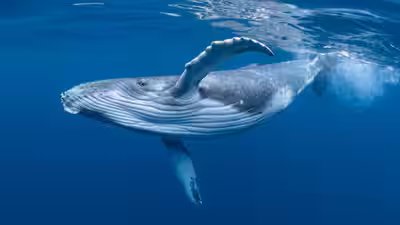
Commercial whaling killed 350,000 blue whales and 725,000 fin whales; more than 40 years later, the giants are slowly returning to the southeast Atlantic

After commercial whaling nearly erased them, blue and fin whales are slowly reclaiming the southeast Atlantic Commercial whaling killed an estimated 350,000 blue whales and 725,000 fin whales during the 20th century. More than 40 years after commercial whaling ended, however, the two largest whale species are slowly returning to parts of their former range…

Read More

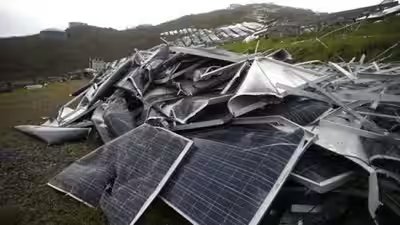
By 2060, discarded solar panels could total 297 to 402 million tonnes worldwide; recycling them could generate almost $1 trillion in economic benefits

Solar Panel Waste: The Unknown Side of Solar Power Discarded solar panels could become a major global waste problem, with as much as 402 million tonnes of photovoltaic (PV) waste expected by 2060. But if these panels are recycled properly, the materials inside them could create almost $1 trillion (£770 billion) in economic value.According to…

Read More