Headlines

Quote of the day by Alan Turing: “A computer would deserve to be called intelligent if…” |

Two people can watch the exact same machine respond to a question and reach completely different conclusions about what just happened. One assumes anything convincing enough must be simulating a mind somewhere underneath. The other insists that convincing behaviour and actual thought are two entirely separate things, no matter how good the imitation gets. Alan…
Read More

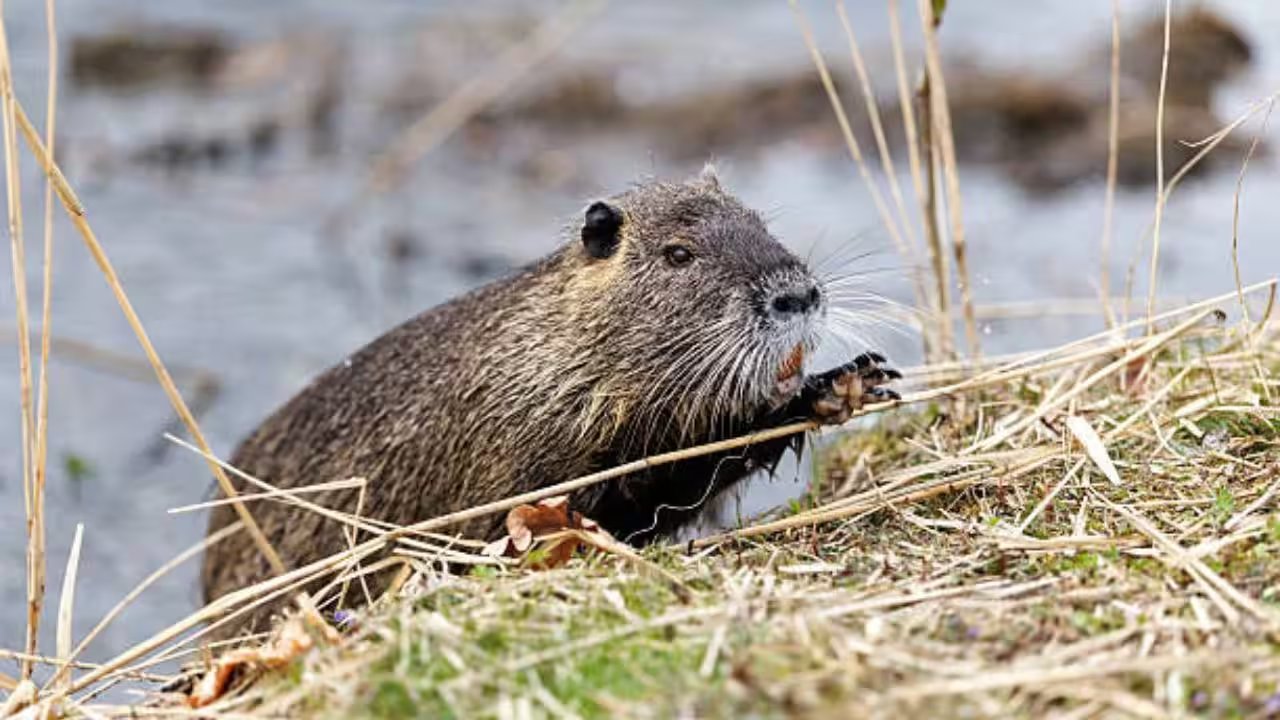
One of the world’s largest rodents was imported for fur farming in North America; today it’s devastating wetlands and riverbanks across US |

Two hundred years ago, you wouldn’t have been able to find them outside of South America. But since then, Nutria, one of the world’s largest rodents, has taken over US. These rodents were initially brought to North America in the late 19th and early 20th centuries, primarily for fur farming, since their soft underfur was…

Read More

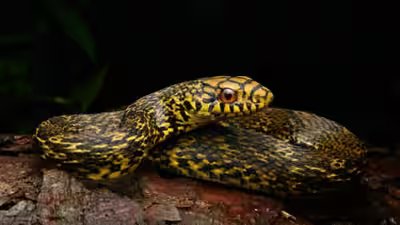
The nonvenomous king ratsnake eats deadly cobras and vipers; scientists have now mapped its genome to investigate how it survives their venom

King ratsnake is known for hunting and eating deadly venomous snakes (Inaturalist photos) A nonvenomous snake that regularly hunts and eats some of the world’s most dangerous venomous snakes has given scientists a new mystery to solve. Researchers have now mapped the genome of the king ratsnake to understand how it survives the venom of…

Read More

Jeff Bezos is secretly funding a mechanical clock inside a Texas mountain. Designed to run for 10,000 years it will play over 3.5 million unique sequences and challenge the scale of human time |

Out of everything that Jeff Bezos could be funding, a mechanical clock does not come to mind. But it seems some clock has been ticking in the mind of the Amazon founder who is quietly supporting the construction of a 10,000-year clock inside a Texas mountain.The work is called the Clock of the Long Now…

Read More

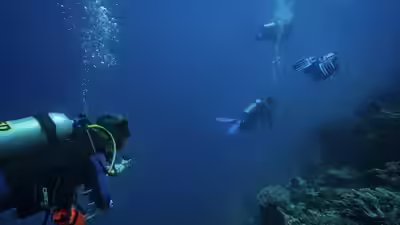
Most scuba divers believed they rarely touched reefs; underwater observers found more than 40% of contacts caused visible damage

A researcher following scuba divers for this project Most scuba divers believe they rarely touch fragile seabed ecosystems, yet underwater observers tracking hundreds of tourists found that more than 40 per cent of their physical contacts caused visible damage to living coral structures.Research published in The Conversation by marine scientists and dive professionals revealed that…

Read More

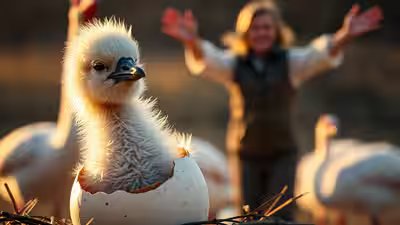
In 1976, a scientist spent seven years dancing with a lonely whooping crane that refused to mate. The chick that followed helped save one of the world’s rarest birds |

In 1976, ornithologist George Archibald began an unusual daily ritual, dancing beside a whooping crane named Tex in an attempt to save one of the rarest birds on the planet. Tex had been raised in captivity and had imprinted on humans rather than other cranes, meaning she showed no interest in mating with her own…

Read More

Around 1200 BCE, major Mediterranean civilisations began collapsing; scientists have now reconstructed the climate conditions surrounding the crisis

Representative Image (AI-generated) Around 1200 BCE, several of the eastern Mediterranean’s most powerful civilisations, including the Mycenaean kingdoms, the Hittite Empire, Canaanite city-states and parts of New Kingdom Egypt, began experiencing a period of dramatic decline. Historians have long debated whether warfare, invasions, earthquakes, internal unrest or climate change played the biggest role in this…

Read More

Quote of the day by Florence Nightingale: ”I attribute my success to this: I never gave…” |

Florence Nightingale is remembered as the founder of modern nursing, but her influence reached far beyond hospitals and healthcare. Through discipline, compassion and a determination to improve lives, she changed the way patients were treated and helped shape modern medicine. Among her many memorable sayings, one quote continues to inspire people across generations: “I attribute…

Read More

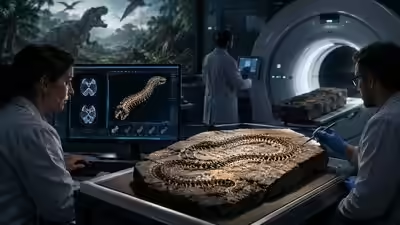
200 years after the first dinosaur, scientists use brain scans on a 100-million-year-old snake fossil from Brazil |

Two centuries ago, a British geologist gave the world its first named dinosaur. Megalosaurus, described from a handful of fossilised bones, marked the birth of an entire scientific field. Back then, researchers worked with little more than fragments, guesswork and imagination to picture prehistoric life. Fast forward 200 years, and palaeontology looks unrecognisable. Scientists no…

Read More