








Scientists found a mysterious mark inside a 236-million-year-old fossil in Argentina that may reveal ancient mammal relatives gave birth instead of laying eggs

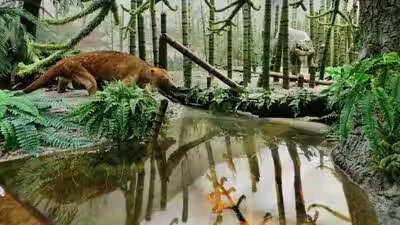
Reconstructed Triassic landscape at the Museum am Löwentor, Stuttgart (Germany), with Chiniquodon theotonicus (left), Batrachotomus kupferzellensis (right), and, poorly visible in the foreground below the water table, a large temnospondyl. Image Credit: Ghedoghedo/Wikipedia A 236-million-year-old fossil from Argentina may have provided the earliest evidence yet that an animal on the evolutionary lineage leading to mammals…

Read Full News

Scientists found genetically unusual avocados in Nicaragua that may preserve clues to a 5,000-year-old human journey from South America  |

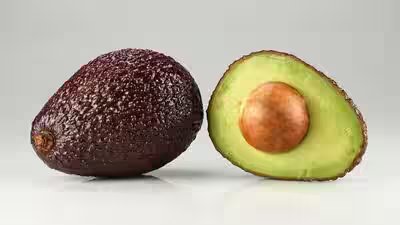
Avocado (single and halved). Image Credit: Ivar Leidus/Wikipedia Avocados growing in Nicaragua may carry a remarkable record of ancient human migration across the Americas. A new study published in ‘Plants, People, Planet’ has found that several avocado varieties growing in Nicaragua are genetically distinct from the commercial varieties commonly found today and are more closely…

Read Full News

In 2016, scientists tested drone-dropped peanut-butter vaccine baits to protect prairie dogs and save North America’s rarest mammal |

Prairie dog, Image: AI Generated The black-footed ferret is North America’s rarest mammal, with only about 300 estimated to survive in the wild at the end of 2015. The species has been listed as endangered since 1967, and its survival is closely tied to prairie dogs, which provide almost all of its food as well…

Read Full News

Nasa-backed SPARK project could send tiny ‘aerobots’ into caves on Saturn’s moon Titan |

Nasa-backed SPARK project could send tiny ‘aerobots’ into caves on Saturn’s moon Titan( PC: AI Generated) Nasa has backed a new concept that could send small flying robots into caves on Saturn’s moon Titan. The project, called SPARK, proposes lightweight vehicles known as aerobots that could be released by a larger spacecraft and guided through…

Read Full News

Hawaii’s native stilt nearly disappeared decades ago; communities and scientists helped its population surpass 1,500 after decades of conservation efforts |

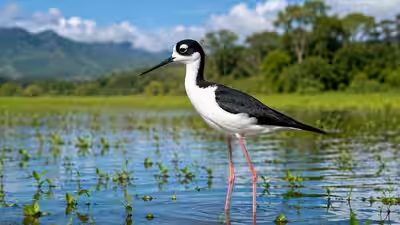
Hawaii’s native Hawaiian stilt, known as aeʻo, has made a remarkable recovery after decades of population decline pushed the bird to roughly 200 individuals in the 1940s. Habitat loss, hunting and introduced predators had severely affected the long-legged wetland bird. More than five decades of legal protection, wetland restoration, predator control and monitoring have since…

Read Full News

Meet Alfred Drummond-Herdman: The 27-year-old trainee lawyer who fills his bedroom with animal dung to film fungi and has identified two new species |

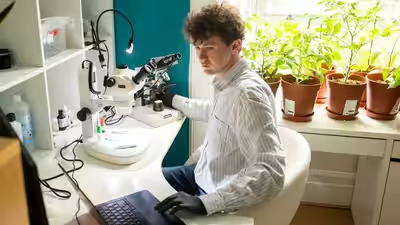
Alfred Drummond-Herdman, a 27-year-old trainee lawyer in Edinburgh, has turned his bedroom into an unusual fungal observation space, filling terrariums and plastic containers with cowpats, grouse droppings and rabbit pellets to document the fungi that grow on them. His fascination with dung-dwelling fungi began during the pandemic after he encountered cowpats covered with mushrooms in…

Read Full News

Smithsonian researchers used X-rays, plastic cups and 216-yard spools of thread to find wild turtle nests; predators raided 13 of 16

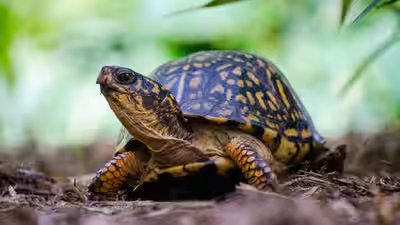
Eastern box turtle (Image Credit: Canva) Finding a turtle nest in the wild is far more difficult than it sounds. Smithsonian researchers studying Eastern box turtles in Virginia have been using a combination of technology and surprisingly simple tools to locate nests and understand what happens to the eggs after they are laid. Their unusual…

Read Full News

Would you eat ketchup that was made from algae but fulfilled your protein intake? Scientists have just created one and they want to see how much algae flavour people will tolerate

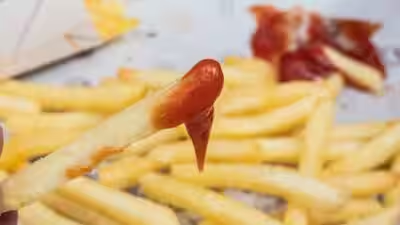
Just like everything else in the world, even food is coming to have its own trends. From a Mediterranean diet to a protein-rich diet, people are trying everything on the internet to be able to achieve their “ideal” body. Recently, scientists used a “gene gun” to shoot pig DNA into produce to create a protein-packed…

Read Full News

Too early to tell where India fits in

Nasa just invited India to help build a permanent base on the Moon. It’s the kind of headline that writes itself — and yet, what it actually means for India is still almost entirely undecided.Nasa wants to do something considerably more ambitious than return astronauts to the Moon. It wants to start building a place…

Read Full News