







Headlines

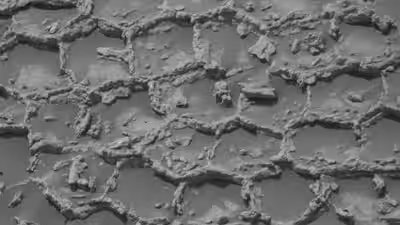
NASA’s curiosity rover spots mysterious honeycomb pattern on Mars, leaving scientists puzzled over its origin

Space and its mysterious world never fail to surprise humans. According to the latest report, 14 years after touching down on the Red Planet, NASA’s Curiosity rover has snapped a photo of a mysterious honeycomb-like texture on the Martian surface, lending yet another mystery to an ever-expanding list of Martian geological features.NASA’s veteran Curiosity rover…

Read Full News

Quote of the day by Charles Darwin: “An American monkey, after getting drunk on brandy, would never touch…” – a witty observation on why humans often repeat the mistakes they already know can harm them |

Charles Darwin (Image source: Wikipedia) A bad experience is supposed to teach a lesson, yet people return to habits they already know are harmful more often than logic would suggest. Charles Darwin noticed the same contradiction and put it more bluntly than most. “An American monkey, after getting drunk on brandy, would never touch it…

Read Full News

Are data centres harming bees? Scientists are investigating the impact of electromagnetic fields |

Bees are among the world’s most important pollinators, helping sustain ecosystems and supporting the production of many fruits, vegetables, nuts and seeds. Yet bee populations have been declining for years due to habitat loss, pesticides, diseases, parasites and climate change. More recently, another potential threat has entered the conversation: the rapid expansion of data centres….

Read Full News

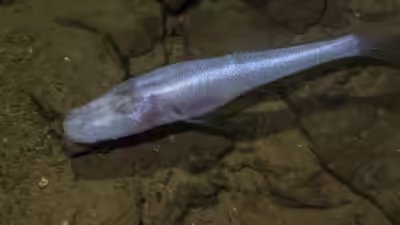
A scientist slipped into a pool beneath a US military base and found a fish later named ‘demon cavefish’ after the Demogorgon from Stranger Things

The Demogorgonichthys arcanus was discovered in a well-known area monitored by biologists for decades (Photo: Matthew Niemiller) A clumsy fall into an underground pool beneath an active US military base has led to the discovery of a strange, eyeless fish named after a TV series monster.Matthew Niemiller, an associate professor of biological sciences at the…

Read Full News

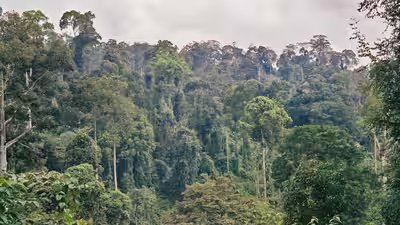
Scientists cut climbing vines from a damaged Borneo forest. Its canopy then grew three times faster, and the method may cost 10 times less than tree planting

Dipterocarp forest at the Danum Valley Field Centre. Borneo’s tropical forests, dominated by trees from the Dipterocarp family, have some of the highest canopies in the world, with some trees reaching 100 meters Simply cutting back aggressive climbing vines in logged tropical forests allows the tree canopy to recover three times faster than planting new…

Read Full News

Scientists warmed the same forest soil by 5°C for 37 years; in the fourth decade, microbes began releasing carbon once thought safely locked away

It’s not just humans that are at risk of extinction due to global warming, it’s the Earth, too. In research conducted over a period of 40 years, scientists have uncovered evidence that challenges long-held assumptions about forest soils.While on the first glance, the Harvard Forest seems like an ordinary woodland filled with oak trees, there…

Read Full News

Around 100 volunteers collected 11 million seeds by hand across Scotland; nearly 8 million native trees are now being grown to rebuild its disappearing Atlantic rainforest |

Volunteers hand-collect native tree seeds from Scotland’s remote woodlands to help restore the country’s endangered Atlantic rainforest and native forests. In one of Scotland’s largest citizen-led woodland restoration efforts, around 100 volunteers have spent the past three years hand-collecting more than 11 million rare native tree seeds from remote forests, islands and rugged coastlines. The…

Read Full News

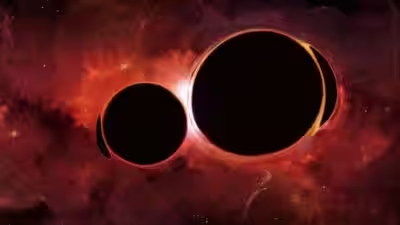
A 1971 prediction by Stephen Hawking just came true with a cosmic collision 1.3 billion light-years away: Now scientists are trying to understand how

A prediction made by Stephen Hawking some 50 years ago has just come true and now, scientists are trying to understand how it reinforces fundamental principles of modern physics. A collision between two black holes about 1.3 billion light-years from Earth has provided the most precise observational evidence ever obtained for a prediction presented by…

Read Full News