






Headlines

Nasa explored putting astronauts into a hibernation-like state for Mars missions, but scientists are still trying to make the science-fiction idea safe for humans |

Sending humans to Mars is one of Nasa’s greatest ambitions, but the journey presents enormous challenges. A round trip could take well over a year, exposing astronauts to dangerous cosmic radiation, muscle and bone loss caused by microgravity, psychological stress and the need to carry vast amounts of food, water and supplies. To tackle these…
Read Full News

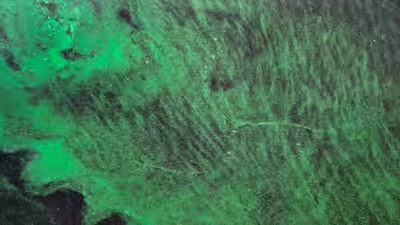
People may not need to touch Florida’s toxic algae blooms to be exposed; scientists found their toxins travelling through the air

Cyanobacteria, a blue-green algae is known to have played an ancient role in establishing Earth’s atmosphere. They love warm temperatures, lots of sunlight and slow-moving water. Florida’s year-round climate provides all of this and more. When rivers, lakes and estuaries are loaded with excess nitrogen and phosphorus, often due to agricultural runoff and improperly treated…

Read Full News

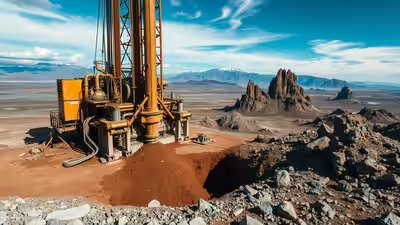
Soviet scientists drilled 12 kilometres into the Earth, but the world’s deepest borehole barely scratched the planet’s crust |

In 1970, Soviet scientists began drilling into the ground on the Kola Peninsula in the far northwest of the country, hoping to reach deeper into the earth than anyone before them. Almost two decades later, in 1989, the project hit its final depth of 12,262 metres, making it the deepest vertical borehole ever created by…

Read Full News

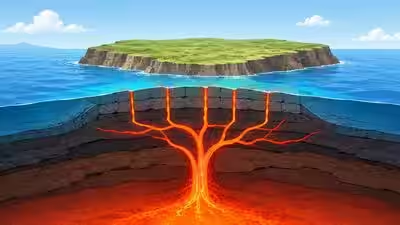
The world’s largest oceanic plateau formed more than 100 million years ago, but scientists have now found the ancient magma pathways still hidden beneath it |

For decades, scientists have known that the Ontong Java Plateau, the world’s largest oceanic plateau, was created by an extraordinary burst of volcanic activity more than 100 million years ago. What remained uncertain was how enormous volumes of magma travelled through the Earth’s lithosphere during that event. According to the study published in Advancing Earth…

Read Full News

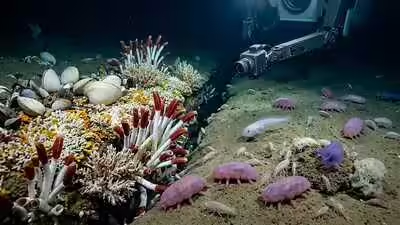
Scientists discover the deepest animal ecosystem ever found, thriving nearly 10 kilometres beneath the Pacific Ocean |

Scientists have discovered the deepest known animal ecosystem on Earth, thriving almost 10 kilometres beneath the Pacific Ocean where sunlight never reaches. At depths of up to 9,533 metres, researchers found dense colonies of blood-red tubeworms, white clams and other marine animals living around methane-rich cold seeps on the ocean floor. The discovery ‘Flourishing chemosynthetic…

Read Full News

More than 2,200 years ago, an ancient Greek scholar calculated the Earth’s circumference with a stick and the Sun |

More than 2,200 years before satellites, GPS and space missions revealed the Earth’s true size, an ancient Greek scholar calculated the planet’s circumference using nothing more than a stick, sunlight and basic geometry. Around 240 BCE, Eratosthenes, the chief librarian of the Library of Alexandria, carried out one of history’s most brilliant scientific experiments. By…

Read Full News

Japan created forest bathing as a public health idea in 1982, but 40 years of research have found a more complicated picture of how forests affect stress |

Forest bathing sounds like an ancient tradition, but it is actually younger than the personal computer. The practice known as shinrin-yoku was coined in Japan in 1982, not passed down through centuries. It began as a public health idea rather than a spiritual one, aimed at a country that was mostly forest but rapidly urbanising,…

Read Full News

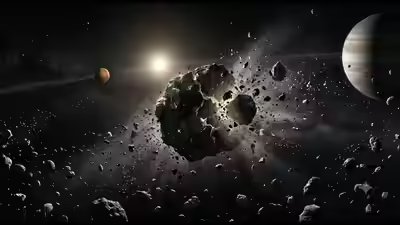
An asteroid shattered near Jupiter’s gravitational gateway 800 million years ago; scientists say the debris may have bombarded Earth for 150 million years

Asteroid breakup 800 million years ago may have triggered impacts on Earth, the Moon and Mars (AI photo) A massive asteroid that broke apart around 800 million years ago may have sent a huge number of rocky fragments towards Earth, the Moon and Mars, according to a new study led by researchers at the Southwest…

Read Full News