




Headlines

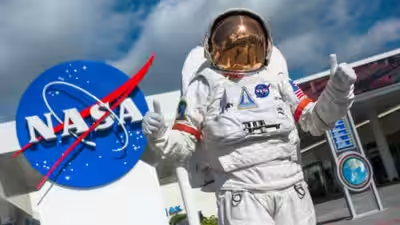
Six hours of psychological testing, three hours of behavioural interview: What does it really take to become an astronaut for NASA and who can apply for it?

A gleaming resume, extreme intelligence and competent physical fitness are still not enough to get you into NASA. The top space agency in the world is not impressed by qualifications on paper and requires an individual to ace real-life tests. In the agency’s 2021 selection cycle, the final 30 candidates completed individual exercises under time…

Read Full News

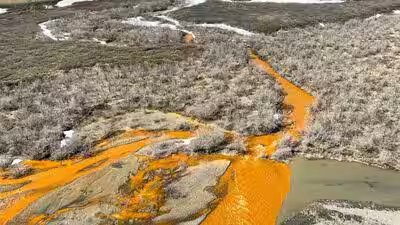
Alaska’s crystal-clear rivers are turning vivid orange: Metal pollution is creating ‘rusting’ waterways, threatening wildlife, habitats and drinking water |

Image Credit: Josh Koch/USGS In the heart of Alaska’s wilderness, a transformation is happening because of which the scientists and local communities are deeply concerned. The once-fresh, crystal-clear rivers of the Brooks Range in northern Alaska are rapidly turning into a vivid, rusty orange colour. This transformation, visible even from space, is not the result…

Read Full News

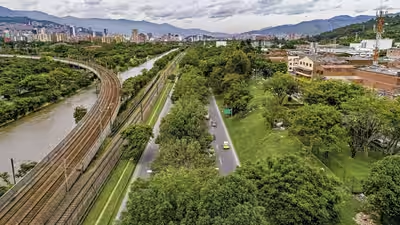
Colombia planted 880,000 trees across the streets of one city to tackle rising temperatures, and the plantation delivered localised cooling of up to 5°C in shaded areas |

As heatwaves become more frequent and intense, cities around the world are searching for ways to stay cooler without relying solely on energy-intensive air conditioning. Medellín, Colombia, has emerged as one of the world’s most celebrated examples of nature-based urban cooling. Through its Green Corridors programme, the city planted around 880,000 trees and more than…

Read Full News

AI cracks a mystery from 1939 that mathematicians couldn’t solve for decades; the answer was hidden in 216 characters |

For decades, solving the world’s hardest mathematical problems has been considered a uniquely human pursuit, requiring imagination, persistence and the ability to explore ideas beyond established methods. Artificial intelligence, meanwhile, has largely been viewed as a tool for computation and analysis. A Harvard mathematician’s collaboration with an experimental AI model has gained widespread interest after…

Read Full News

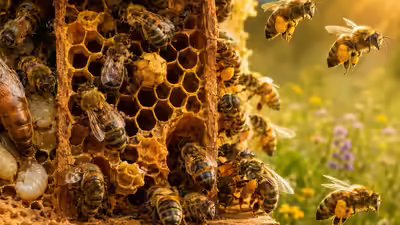
Scientists studying bee brains found clues to how colonies coordinate complex behaviour without a central controller, relying instead on many small individual decisions

Honeybee colonies organise work without any leader assigning tasks, but scientists have now discovered that specific brain circuits help control this process. (Representational photo) Honeybee colonies work in an organised way even though no bee tells the others what to do. Young bees look after the queen and baby bees, older ones build and guard…

Read Full News

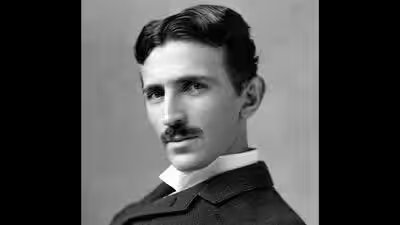
Quote of the day by Nikola Tesla: “I don’t care that they stole my idea . . I care that they…” – a powerful lesson on originality, innovation and why true creators never stop thinking |

Nikola Tesla (Image: Wikipedia) Being copied usually provokes anger. A line widely credited to Nikola Tesla suggests a different reaction entirely. “I don’t care that they stole my idea,” it goes. “I care that they don’t have any of their own.” Rather than focusing on the theft itself, the line shifts attention toward something Tesla…

Read Full News

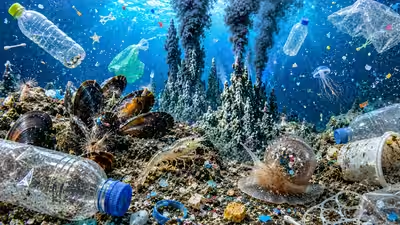
Scientists looked 2,000 metres below the ocean and found microplastics in 92% of deep-sea animals, revealing plastic has reached Earth’s most remote ecosystems and could threaten marine food webs |

Scientists have uncovered plastic pollution in one of Earth’s most isolated environments, challenging the long-held belief that the deep ocean remains largely untouched by human activity. Analysing animals living more than 2,000 metres beneath the sea, researchers discovered that 92% contained microplastics, offering some of the clearest evidence yet that plastic waste has reached even…

Read Full News