Headlines

Santanu

Part of SpaceX rocket the size of a school bus crashed into the Moon, scientists say it caused a huge explosion and a 60-foot crater

SpaceX has been achieving many of its targets these days, even by accident. After months of anticipation, a discarded upper stage of a SpaceX Falcon 9 rocket is believed to have careened into the Moon early Wednesday morning near the Einstein Crater. It exploded on impact, causing a flash that may have been visible from…

Read More

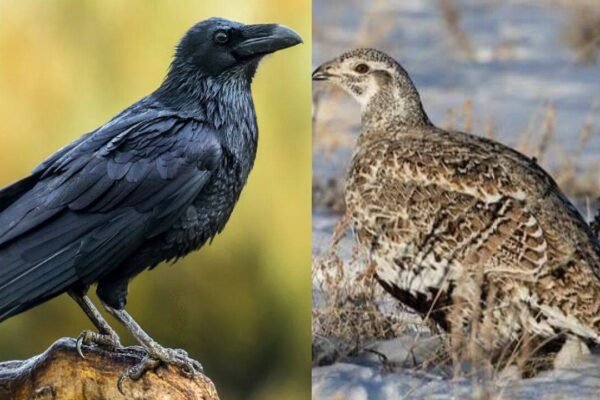
Why wildlife managers are coating raven eggs with nontoxic oil to protect sage-grouse

A new study has found that coating common raven eggs with non-toxic mineral oil can reduce raven reproduction and improve the survival of vulnerable greater sage-grouse. Researchers reported that sage-grouse nest survival more than doubled, while their relative abundance increased by 44% in treated areas. However, they said long-term conservation also requires protecting habitat and…

Read More

Meet Aakash Manaswi, the Florida student whose CO2 mite blower made bees healthier and increased honey across 60 hives while killing a parasite that harms 50% of them annually

Honey bees are one of the most important insects across the globe. The buzzing bees do more than just make sweet nectar, they pollinate crops, maintain ecosystems and produce natural goods. According to the UN Environment Programme, they directly contribute to food security and a third of the world’s food production depends on bees. However,…

Read More

In 1941, Henry Ford introduced an experimental soybean car that used plant-based plastic body panels and challenged the future of steel automobiles |

Long before “bio-based materials” entered the lexicon of the car industry, Henry Ford was trying to answer a different question. Could farms supply more than food? Could fields also provide the raw materials for manufacturing? That idea reached its most unusual expression in the summer of 1941, when Ford unveiled an experimental vehicle with a…

Read More

Scientists reviewed 54 Asian oak species; 40 had no backup in any botanical collection, while one may already be extinct in the wild

Scientists reviewed 54 Asian oak species; 40 had no backup in any botanical collection A detailed study of 54 Asian oak species has found that 40 have no living backup in any botanical garden around the world. This means that nearly three-quarters of the trees could disappear completely if their wild populations are lost.One of…

Read More

Researchers examined every body vertebra in 13 Australian snakes and found five distinct regions, including a short neck just 7 to 12 vertebrae long

Snakes aren’t simple tubes. Their bodies have five regions—including a short neck By measuring every vertebra along the bodies of 13 native Australian snakes, evolutionary biologists have discovered that a snake’s spine is much more organized than previously believed. Instead of being one long, uniform structure, it contains five distinct anatomical regions, including a surprisingly…

Read More

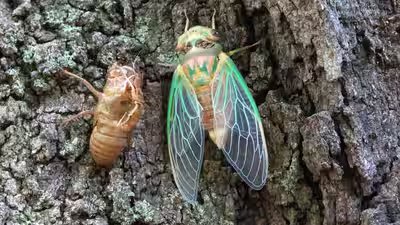
Scientists coated a cicada wing with silver and created a sensor that amplified faint molecular signals by tens of millions

Scientists have transformed a simple fragment of a cicada’s wing into an optical platform capable of detecting molecular signals By coating a cicada wing with an extremely thin layer of silver, researchers in Taiwan have created a highly sensitive optical sensor that can boost very weak molecular signals by tens of millions of times.The findings,…

Read More

Quote of the day by Democritus: “Nothing exists except atoms and empty space; everything else is…” – ancient theory that changed how we think about reality |

Representative Image of Democritus teaching early ideas about atoms in ancient Greece (AI-generated image) Two people can look at the world around them and reach completely different conclusions about what is actually there. One sees a vast, cluttered inventory of distinct things, colours, tastes, textures, each apparently real in its own right. The other looks…

Read More

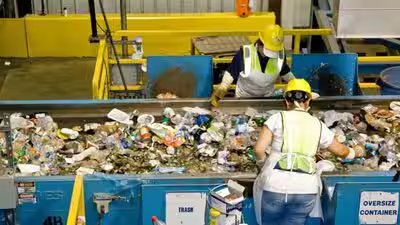
Scientists accidentally discovered a way to recycle plastic into valuable chemicals using only water and oxygen |

Image Credit: US Environmental Protection Agency Plastic waste is a global threat to both the environment and public health, with over 400 million tons produced annually. Turning plastic into value-added chemicals holds significant promise, but the industrial adoption gets slowed down by the high costs of metal catalysts and how they become deactivated by additives….

Read More