Headlines

Santanu

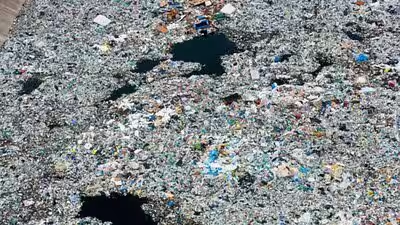
A rotating ‘garbage island’ spreads over 1.6 million sq km in the Pacific: Plastic averages 50 kilograms per square kilometre, and 75 to 86% of the debris comes from fishing gear

A floating and rotating ‘garbage island’ of an estimated area of 1.6 million square kilometres lies between Hawaii and California, according to a scientific estimate published in 2018. The area of the island is said to be larger than Para and nearly three times the size of metropolitan France. What exists here is a plastic…

Read More

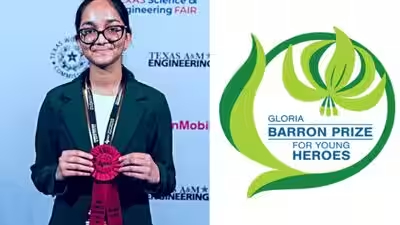
Meet Tina Jin, the 15-year-old Massachusetts student who turned animal bones into a new material for cleaning polluted water |

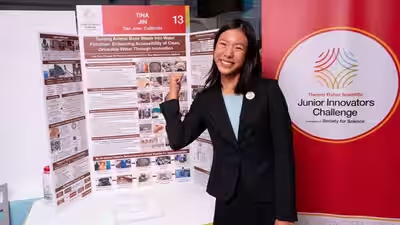
A 15-year-old Massachusetts student is exploring an unusual way to make polluted water cleaner: using discarded animal bones. Tina Jin, a student at Phillips Academy in Andover, developed a filtration system that uses ground cow, lamb or pig bones arranged in multiple layers to target different contaminants in water. Her research focuses on places where…

Read More

Meet Zainab Nathani, the Illinois student who designed a material that can pull water from humid air using sunlight |

Zainab Nathani, a high school junior from Niles, Illinois, has designed a material that can pull drinkable water straight out of humid air, powered entirely by sunlight. Studying at Niles Township West High School, she built her project around emulsion-templated composite biogels, porous, bio-based structures engineered to trap moisture from the atmosphere and release it…

Read More

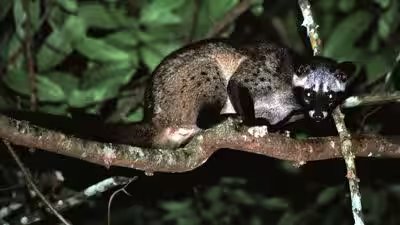
Coffee beans found in Civet poop used to make one of the world’s most expensive Kopi Luwak coffee which costs thousands of dollars per kilogram |

Asian palm civet. Image Credit: Bernard DUPONT/Wikipedia Kopi luwak is one of the world’s most unusual coffees because its production begins inside the digestive system of an animal. The coffee is made from beans eaten and later excreted by the ‘Asian palm civet,’ a small mammal found across parts of South and Southeast Asia. The…

Read More

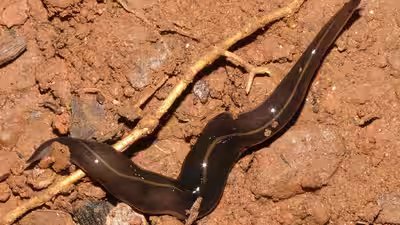
In the 1990s, a predatory flatworm was released in Samoa to control giant African snails; it later became linked to the decline and extinction of native island snails

In the 1990s, a predatory flatworm was released in Samoa to control giant African snails An aggressive predatory flatworm introduced to Pacific islands during the 1990s to control agricultural pests has pushed native land snail species toward extinction, turning a planned biological control program into an ecological disaster. The New Guinea flatworm (Platydemus manokwari) was…

Read More

Meet Finnegan McGill, the 18-year-old Arizona student who spent four years building an AI device that can identify birds from their calls and pinpoint where they are |

Finnegan McGill. Image Credit: Chris Ayers/Society for Science Finnegan McGill has spent more than four years turning a concern about declining bird populations into a working piece of technology. This 18-year-old student from Tucson, Arizona, developed a device known as ‘A-BiRD’ (Automated Bird Recognition Device) which could help in identifying birds by their calls and…

Read More

In 1937, Australian scientists released infected rabbits on an island to test a virus that would later transform rabbit control across the continent |

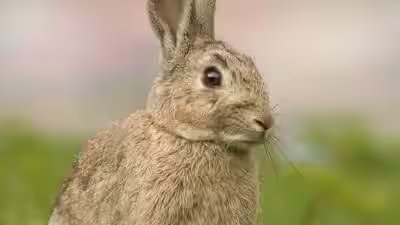
A European rabbit in Tasmania. Image Credit: JJ Harrison/Wikipedia In 1937, Australian scientists took an unusual step in the fight against one of the country’s most destructive pests known as ‘rabbits.’ They released rabbits carrying ‘myxoma virus’ on Wardang Island, off South Australia, to see whether the disease could spread naturally. The experiment was part…

Read More

Meet Ankan Das, the 15-year-old Florida student who built a shape-shifting robot that crawls on Moon soil and squeezes through tight spaces |

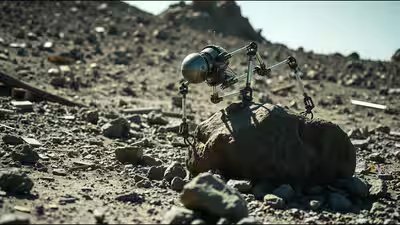
Representative Image of a tensegrity robot navigating obstacles during a search-and-rescue mission (AI-generated image) Ankan Das is a 15-year-old sophomore at Oviedo High School in Florida, but his latest science-fair project looks more like something from a robotics laboratory than a school classroom. For his Regeneron International Science and Engineering Fair project, Das built a…

Read More