








Santanu

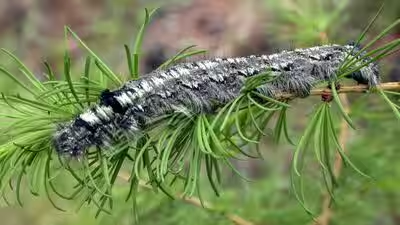
A moth outbreak has killed off forests across Siberia, now the flammable wood is causing wildfires that humans are unable to contain

An insect outbreak has left Siberia’s forests dead while also transforming the region into a tinderbox where wildfires are now spreading beyond human control. The trees burning across Krasnoyarsk this year were, in a lot of cases, already dead. Not from the fire or the drought, but because of a small moth.Dendrolimus sibiricus, the Siberian…

Read Full News

In 2002, a Kansas landowner began restoring 320 neglected acres with winter burns; 20 years later, native tallgrass and wildflowers had returned | World News

From ash to wildflowers: two decades of controlled burns on one Kansas prairie (representative image). Image Credits: ChatGPT When Mike Moddrell purchased 320 acres of land in southwest Douglas County, Kansas, in 2002, the land was tired. In the years of neglect, weeds and cedar trees had invaded the land. More than two decades later,…

Read Full News

Asteroid Apophis will fly just 32,000 kilometres from Earth in April 2029, and Nasa says the encounter could reshape its surface |

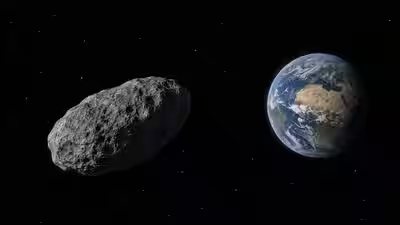
Asteroid Apophis will pass within 32,000 kilometres of Earth’s surface on 13 April 2029, a distance closer than the ring of geostationary satellites that orbit our planet. The flyby, visible to the naked eye across parts of Europe, Africa and Asia, is the closest known approach by an object of this size that scientists have…

Read Full News

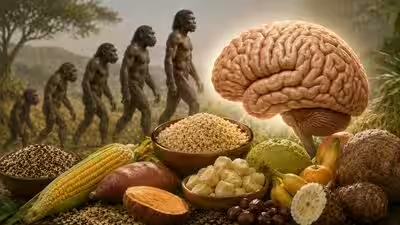
Human brain evolution may have depended on sugars and carbohydrates, not just meat; new study finds |

For decades, the story of human brain evolution has centred on meat. Increasing consumption of animal protein and fat has long been credited with powering the dramatic growth of the human brain over four million years. According to the new study published in Science, titled ‘A central role for dietary sugars in human evolution’, researchers…

Read Full News

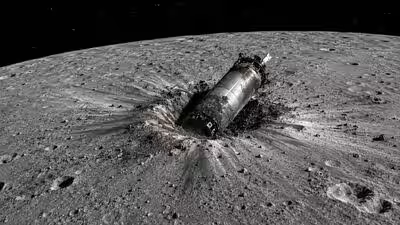
Nasa says SpaceX Falcon 9 upper stage hit the Moon exactly as predicted, revealing new clues about lunar impacts |

The Moon has absorbed billions of impacts over roughly four billion years, most from meteoroids whose origin, mass and impact velocity remain permanently unknown. The object expected to strike near the Einstein and Bell craters on Wednesday, 5 August, breaks that pattern entirely. According to Nasa, a spent Falcon 9 upper stage from a January…

Read Full News

Antarctica study reveals how 10 months of isolation changed crew psychology before future Mars missions |

For ten months, twelve crew members lived and worked at Concordia Station, one of the most remote research outposts on Earth. Cut off from rescue, sunlight and the outside world for much of the year, the team wore sensors that quietly recorded every close encounter between them. Researchers paired this data with regular psychological check-ins…

Read Full News

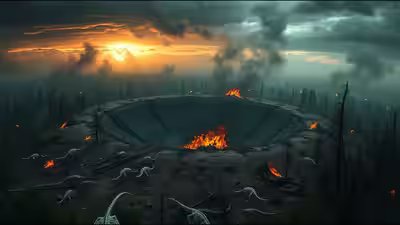
The asteroid that killed the dinosaurs nearly wiped out birds too, leaving only a few ground-dwelling survivors |

Representative Image of the Chicxulub asteroid striking Earth amid devastated prehistoric landscapes (AI-generated image) Sixty-six million years ago, an asteroid roughly 10 kilometres wide slammed into what is now Mexico’s Yucatan Peninsula, gouging out the Chicxulub crater and triggering the most devastating mass extinction event in the history of complex life on Earth. Non-avian dinosaurs,…

Read Full News

Scientists explain how the ancient Greek Antikythera Mechanism copied the Moon’s changing speed without modern technology |

The Moon does not travel across the sky at a constant pace. Its speed changes throughout each orbit, a detail ancient astronomers noticed long before they had the mathematics to explain it fully. More than two thousand years ago, the makers of the Antikythera Mechanism found a way to reproduce this unevenness using bronze gears…

Read Full News

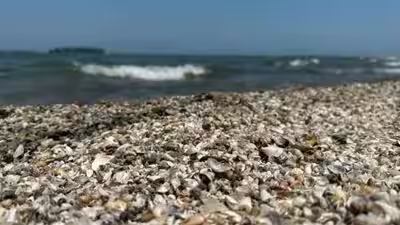
Thousands of zebra mussels were detected in Spain’s Ebro River in 2001; today they are collapsing structures and pipes with a population of 40,000 per square meter

In northeastern Spain, the spread of zebra mussels continues to baffle water management experts, keeping them on alert over the damage to water infrastructure caused by these invasive species. Their presence in reservoirs, irrigation canals and water distribution networks has begun to disrupt water supplies, especially in Catalonia’s Lleida province, as per a report by…

Read Full News

Researchers mapped more than 100 lakes across 1,000 kilometres of Brazil and Uruguay; the network could detect ecosystem stress before irreversible damage

Published in the journal One Ecosystem, the research provides the first systematic assessment of the Southern American Coastal Shallow Subtropical Lakes What if lakes could warn us about an environmental disaster? These freshwater systems may be giving off subtle biological signals long before the fish start dying off, the algae bloom on the water, or…

Read Full News