








Santanu

If New York’s worst recorded rainfall is 200 mm, what could a plausible 300-mm storm look like? MIT built an AI system to map extreme events that have never happened before

The method, called Extreme Event Aware, or “η-learning”, does not need previous extreme events to create these scenarios. (Representational AP photo) What would a once-in-a-century storm look like if it was stronger than anything recorded before? Researchers at the Massachusetts Institute of Technology (MIT) have developed a machine-learning method that can generate realistic scenarios for…

Read Full News

In 1962, NASA loaded 22,900 gallons of water onto a Saturn I rocket and deliberately blew the container apart 65 miles above Earth to study what water would do in the upper atmosphere

Representative Image (AI-generated) For humans to travel deeper into space and remain there for months or even years, they will need much more than powerful rockets. Astronauts must have a continuous supply of oxygen, water and food, while waste and carbon dioxide must be carefully managed. On short missions, these needs can largely be met…

Read Full News

In the 1800s, red foxes were brought to California for hunting. Decades later, the light-footed Ridgway’s rail declined to just 5 breeding pairs |

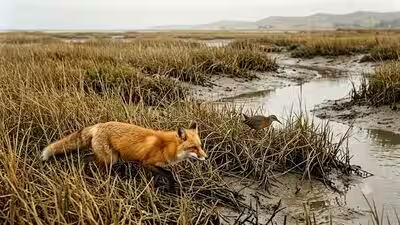
A red fox introduced to California more than a century ago might seem far removed from the fate of a small marsh bird. Yet the two became linked in the coastal wetlands of Southern California, where the light-footed Ridgway’s rail has struggled to survive. The bird spends much of its time concealed among cordgrass and…

Read Full News

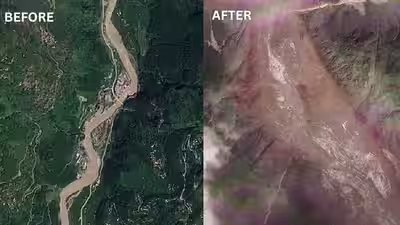
Before and after: Satellite images show how Nepal’s green mountainside turned into debris field

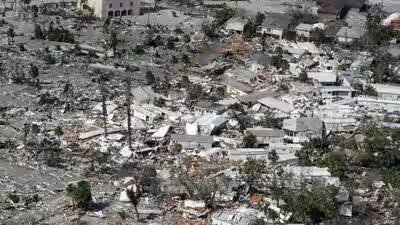
A combination of satellite images shows the valleys near the Nepal-China border on August 23, 2026, before the devastating floods and on August 26, 2026, after the disaster. (Photo: Reuters) Satellite images taken before and after the deadly flash flood near Nepal’s border with Tibet reveal a striking change in the landscape: stretches of green…

Read Full News

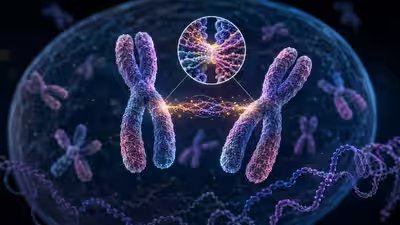
Scientists found that DNA once dismissed as “junk” helps chromosomes find their partners |

For years, the dense loops of repetitive DNA clustered near the middle of chromosomes were treated as evolutionary clutter. According to the new study published in Nature, titled ‘Meiotic pairing through barcode-like satellite DNA repeats‘, researchers working with fruit flies have shown that this so-called satellite DNA forms a kind of barcode: a unique combination…

Read Full News

COP17: New global architecture for drought resilience launched at UNCCD meet | India News

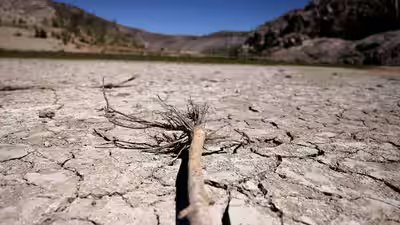
(Representative image) DR’s technical monitoring metrics will enable countries to assess their capacity to anticipate, prepare for and adapt to drought (Photo: Reuters). NEW DELHI: Amid reports that three out of four people worldwide could face drought by 2050, the United Nations Convention to Combat Desertification (UNCCD) during its 17th conference (COP17) on Wednesday took…

Read Full News

Scientists analysed thousands of animal genomes and found hidden “evolutionary highways” stretching back 600 million years |

Scientists have traced hidden pathways through animal evolution by comparing thousands of genomes and following pieces of chromosomes that have survived for hundreds of millions of years. The study examined 5,821 chromosome-scale genomes from 4,454 species across 19 animal phyla, using 29 ancient linkage groups as markers of chromosome history. Every one of the 406…

Read Full News

MIT scientists watched electrons rebuild inside a quantum material; one phase grew like an ice crystal |

Deep inside a crystal cooled to nearly -230°C, MIT physicists have caught something rarely seen in quantum materials: two populations of electrons rebuilding themselves into wave-like order after being scattered apart by laser light, and doing so in two completely different ways. Working with erbium tritelluride, a rare-earth material known for hosting a pair of…

Read Full News

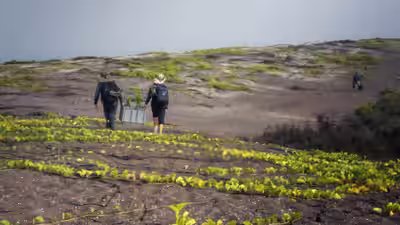
In 2007, only 6 Galápagos snapdragons were known to survive on remote lava fields; after conservationists planted 94 nursery-grown shrubs, the wild adult population has grown to 28

Researchers transporting Galvezia leucantha subsp. Leucantha at the restoration site, preparing for its planting A critically endangered shrub that once came close to disappearing from the Galápagos Islands is showing signs of a slow but important recovery after a careful conservation effort lasting nearly three decades. According to findings published in the journal Nature Conservation…

Read Full News

Yale researchers found a new way to tackle ‘forever chemicals’: they make some PFAS molecules roughly twice as large so they separate from water and become easier to destroy

forever checmicals(Representative image) Per- and polyfluoroalkyl substances (PFAS) are often called “forever chemicals” because their ultra-strong carbon–fluorine bonds make them stubbornly resistant to breakdown in the environment. They’re prized in industry for repelling water, oil and heat, but that same durability means they persist in soil, water and living tissue long after use. Now, a…

Read Full News