










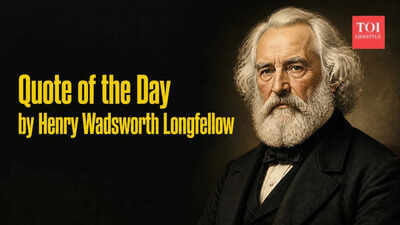
Henry Wadsworth Longfellow was one of America’s most adored poets. He was a literary giant whose words have secured a place in the hearts of readers of all generations. Writes about love, loss, courage, faith, nature and the passage of time. Longfellow was known for his lyrical poems that rhymed beautifully. His wrote poetry that made a deep mark and showcased a deep understanding of human emotions.Longfellow was born in Portland, Maine (then part of Massachusetts) on February 27, 1807, into a family that valued education and literature. His father, Stephen Longfellow, was a lawyer and a congressman, and his mother, Zilpah, encouraged reading and learning. As a kid Henry had an early interest in books, languages and storytelling. He particularly loved the writings of Washington Irving and others who swept the reader off to lands of fancy and adventure. He was academically capable from the outset. He entered Bowdoin College in Maine at 14, where he studied with future American literary figure Nathaniel Hawthorne. Longfellow received his degree in 1825, and his interest in languages and literature soon led him to leave the United States. He travelled in Europe, studying French, Spanish, Italian and German, among other languages.Longfellow returned to America and became professor of modern languages at Bowdoin College. He later became Smith Professor of Modern Languages at Harvard University, where he was able to blend his academic interests with his love of literature. He wasn’t just a poet writing from his own inspiration; he was a scholar who believed literature could connect cultures and generations. His translations brought some important works from European literary traditions to the attention of English-speaking readers.His worksHis own literary career began to take off with the publication of Voices of the Nite in 1839. Longfellow wrote several classics that have passed the test of time. The Psalm of Life, published in 1838, urged readers to live with purpose and not to succumb to despair. His famous opening, “Tell me not, in mournful numbers, Life is but an empty dream,” echoed his belief that human beings should use their time meaningfully. The poem was especially popular for its message of persistence and action.In 1847 he published Evangeline, a narrative poem telling the story of a young Acadian woman who is separated from her beloved in the expulsion of the Acadians from their homes in Canada. Through the story of her lifelong search, Longfellow examined devotion, displacement, suffering and enduring love. In 1855 came The Song of Hiawatha, a large ambitious narrative poem based on Indian traditions and Indian tales. Its characteristic rhythm and narrative style made it one of his most recognisable works, but modern readers also critique its romanticised portrayal of Indigenous cultures.Paul Revere’s Ride, published in 1861, is another famous work that transformed a historical episode from the American Revolution into a dramatic and memorable poem. “Listen, my children, and you shall hear” were the opening words, familiar to generations of schoolchildren. Longfellow showed how poetry could preserve history in the memory and make it emotionally compelling. His own life, however, was not immune to the sorrows that so often haunted his writing. He suffered heavy personal losses, particularly in his family life. His first wife, Mary Storer Potter, died following a miscarriage in 1835. Married Frances Appleton in 1843, by whom he had six children. So he married and was happy for many years. In 1861 tragedy struck again when Frances died after her dress caught fire in their home. Longfellow desperately tried to save her and received burns himself. Her death destroyed him and he had trouble showing his grief.ContributionHe continued to write, though his later work was suffused with a greater sense of mortality, memory and the fragility of happiness. His poem, The Cross of Snow, published posthumously and written after Frances’s death, shows the weight of that loss even after so much time had passed. Longfellow died at his home in Cambridge, Massachusetts, on March 24, 1882, aged seventy-five. By then he was one of the most widely read poets in the English speaking world. His funeral was attended by admirers and his influence stretched far beyond America. He was the first American poet to be honoured with a bust in Poets’ Corner at Westminster Abbey.He did more for literature than pen memorable lines and celebrated poems. Longfellow’s lasting legacy is his gift for making readers feel known. His poems remind us that courage exists even in fear, that happiness and grief often co-habit, and that the experiences that seem commonplace may bear extraordinary emotional depth. His words are still true more than a hundred years after he died, for the human emotions he wrote about are unchanged.Quote of the Day“Every man has his secret sorrows which the world knows not; and often times we call a man cold when he is only sad.” It is one of the most iconic and profound quotes of Henry Wadsworth Longfellow.The quote reminds us that not all quiet people are arrogant, not all emotionally distant people are indifferent, and not everyone who avoids conversation is unfriendly. Sometimes what looks like coldness is simply sadness that a person hasn’t found the courage, words or opportunity to express.The first part of the quote, ‘Every man has his secret sorrows which the world knows not’ draws attention to the private emotional lives people live. Someone who seems successful may be quietly battling self-doubt. If a friend suddenly stops making plans, they may be grieving a loss they don’t want to talk about.Humans are very selective about what they leak. Some people hide their pain because they don’t want to burden others. Others are afraid of being judged, misunderstood or seen as weak. Then there are those who simply do not know how to put their feelings into words. They go to work, they go to meetings, they answer messages. They do all the things that make up the routine of life even when something inside them feels broken. Their silence does not mean nothing is happening inside of them.And often times we call a man cold when he is only sad. ” This second part of the quote is perhaps more meaningful. It shows how quickly we interpret another person’s behaviour through our own expectations. If they don’t respond enthusiastically we can assume that they are rude. And if they remove themselves from social gatherings we may think they have become arrogant. If they stop being affectionate we may think that they don’t care anymore. Emotional suffering can alter the way people communicate and interact. Grief can make a person quieter, less expressive, distracted or distant. What we see as a lack of warmth may be an inability to feel or express happiness at that moment.There is an important psychology to this. Emotional distress doesn’t always look like crying or sadness. People cope with tough experiences in different ways. Some get chatty. Some get quiet. Some want to be with people and some want to be alone. There are some who still smile, finding normality in routine. So it is possible to misunderstand someone’s emotional state by looking only at their outward behaviour.The quote also makes us rethink the way we treat people. Instead of assuming someone is unfriendly, difficult or insensitive, we can stop for a moment and wonder if there might be more to it. Sometimes a simple question such as “Are you okay?” can open a door the person has been waiting for someone to notice.” Equally important is to give people space to talk when they are ready to, without demanding an explanation or giving unsolicited advice.But compassion is not about excusing hurtful behaviour, or assuming that every person you see across a room is secretly suffering. It simply means accepting that human behaviour is often more complicated than it seems. We can maintain healthy boundaries AND still choose not to make unfair assumptions about others.Perhaps the most beautiful lesson in Longfellow’s words is that kindness begins with knowing that we cannot see the entire story of another person’s life. There can be disappointment behind a stern expression. Heartbreak behind silence. A person struggling to hold themself together behind apparent indifference. We live in a world that encourages quick takes and immediate opinions. We know who’s approachable, who’s arrogant, who’s happy and who’s difficult, often from a few interactions. Longfellow’s words remind us to slow down and to see beneath the surface.