







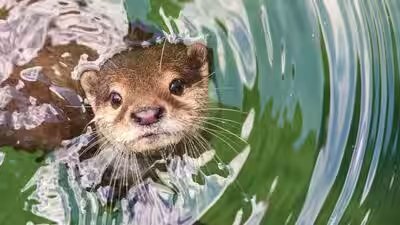
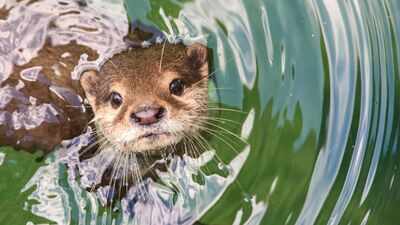
Some of the wildlife’s most exciting discoveries happen when you accidentally find one thing in search of another. NBC Bay Area News has reported that wildlife cameras installed to observe foxes on California’s San Mateo coast ended up capturing an animal that researchers had not expected to find in the area at all. A North American river otter appeared on camera at the Cloverdale Ranch Open Space Preserve near Pescadero, with photographs taken across a period of three months in the summer of 2026. Conservationists are thrilled by the sighting, given that this species had not been documented on the San Mateo coast since the 1800s.Ken Hickman, an independent researcher who first noted the discovery, works with the Midpeninsula Regional Open Space District, which manages the preserve. While reviewing the camera images, Hickman spotted the otter and shared the photographs with biologists, who confirmed the animal’s identity. What began as an effort to monitor local wildlife had uncovered evidence of a species returning to a part of its historic range.
A species that once lived along the California coast
North American river otters (Lontra canadensis) were historically found along the western coast of North America, ranging from Alaska south to Santa Barbara County in California. Their presence in these waters and waterways was not unusual, but the situation changed during the 19th century, when the fur trade severely reduced their populations. Pollution also contributed to the loss of suitable habitats, leaving gaps in the areas where the animals had once lived.River otters have since recovered in parts of California, although their distribution has not returned uniformly across their former range. They are more commonly found north of the Golden Gate, including in Marin County and parts of the East Bay, while sightings along the ocean-facing side of the San Francisco Peninsula have remained uncommon.There have also been occasional appearances elsewhere in the region. In 2012, a river otter nicknamed Sutro Sam became known after taking up temporary residence at San Francisco’s Sutro Baths. However, the latest discovery is a remarkable finding largely because it provides documented evidence of an otter on the San Mateo coast, an area where this species had not been known to occur for more than a century.
Where did this otter come from?
While the photographs have confirmed the animal’s presence, they have not answered the question of how it reached the preserve. Researchers do not yet know its origin, and the sighting alone cannot establish whether other river otters have also been moving into the area unnoticed. River otters are known to inhabit parts of the San Francisco Bay shoreline, while populations also occur along the Pacific coast farther north, including in Marin County. The animal could have travelled from one of these populations, although its precise route remains uncertain.The photographs therefore offer researchers a starting point rather than a complete explanation. Further observations could help establish whether this was an isolated visit or part of a wider movement of river otters into their former habitats.What the sighting tells us about the preserveThe appearance of the otter has also drawn attention to the condition of the landscape where it was found. River otters require reliable food sources and suitable aquatic habitats. Their varied diet can include fish, crayfish, frogs, turtles and birds’ eggs. Their presence can therefore offer useful clues about the health of an ecosystem.Matt Sharp Chaney, a wildlife ecologist with the Midpeninsula Regional Open Space District, described the discovery as encouraging because river otters depend on aquatic environments capable of supporting complex food webs. The preserve also supports species such as coho salmon and steelhead trout, which are associated with the health of local waterways. The landscape has also benefited from restoration work carried out before Midpen took over its management. The San Mateo County Resource Conservation District and the Peninsula Open Space Trust completed projects involving in-stream ponds and floodplains, helping restore parts of the watershed.
The search for more sightings
For now, researchers are hoping that the otter will not be the last of its kind to appear along this stretch of coast. The River Otter Ecology Project, which works on river otter research, education and conservation, has encouraged members of the public to report their observations through its Otter Spotter community science platform.Such findings have helped researchers build a clearer picture of where river otters are travelling and living. Even sightings that might appear ordinary to someone walking near a creek or shoreline could provide useful information when combined with other observations. The Cloverdale Ranch Open Space Preserve remains an important landscape for wildlife, and conservationists continue to monitor the animals that inhabit it. For Hickman and the biologists who examined his photographs, the unexpected visitor has provided a reason to look more closely at what else the area might reveal.