


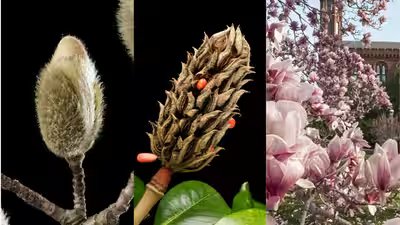
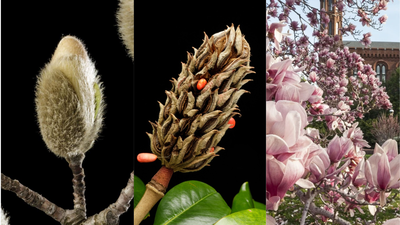
Magnolia trees are admired around the world for their large, fragrant flowers, but they also preserve one of the oldest evolutionary stories in the plant kingdom. Long before bees, butterflies or many modern flowering plants appeared, magnolias were already blooming across prehistoric landscapes. Fossil evidence suggests the ancestors of modern magnolias evolved more than 95 million years ago, during a time when bees had not yet evolved. Instead of relying on bees for pollination, magnolias formed a partnership with an even older group of insects, beetles. That ancient relationship survives today, making magnolias one of the few living flowering plants that still depend primarily on beetles to reproduce.
How magnolias evolved to attract beetles millions of years before bees existed
According to Smithsonian Gardens, Magnolias belong to one of the oldest lineages of flowering plants, known as the Magnoliaceae. Palaeobotanical evidence indicates that their ancestors appeared during the Late Cretaceous Period, when dinosaurs still dominated the Earth.At that time, bees either did not exist or had not yet become widespread pollinators. Instead, the insect world was dominated by beetles, flies and other early pollinating insects. As a result, magnolias evolved flowers specifically suited to attracting beetles rather than the specialised bee-pollinated flowers seen in many modern plants.Scientists consider magnolias a “basal angiosperm,” meaning they retain several ancient characteristics that offer clues to how the earliest flowering plants evolved.
Why beetles are still magnolias’ favourite pollinators
Unlike bees, which collect pollen efficiently before quickly moving on, beetles are far less delicate visitors. They crawl through magnolia flowers while feeding on pollen and floral tissues, transferring pollen between blossoms almost by accident. But magnolias have evolved to accommodate this behaviour over millions of years.According to research, ‘Pollination ecology of Magnolia ovata may explain the overall large flower size of the genus ’, published in the journal Flora, many beetles do far more than simply feed inside magnolia flowers. They often remain within the blooms for extended periods, using them as sheltered spaces to feed, mate and even spend the night before moving on to another flower. As they wander through the flower’s reproductive structures, their bodies become coated with pollen, which they carry to the next blossom.To withstand these rough, long-term visitors, magnolia flowers evolved thick, fleshy petals that resist damage from chewing beetles while producing abundant pollen and strong fragrances that attract them. The study notes that this close relationship benefits both species: the flower provides food and protection, while the beetles ensure successful pollination. Even today, beetles remain the primary pollinators of many magnolia species, preserving an ecological partnership that has endured for more than 95 million years, making it one of the oldest known plant-pollinator relationships still surviving today.
Living fossils that survived the age of dinosaurs
Magnolias are often described as living fossils because many of their floral features have changed remarkably little over millions of years. Their flowers lack some of the specialised structures found in more recently evolved flowering plants, instead displaying simpler arrangements that resemble some of the earliest angiosperms.Fossil discoveries show that magnolia-like plants lived alongside dinosaurs and survived the mass extinction events. Their descendants continued evolving while maintaining many ancestral characteristics that modern botanists still study today. Fossilised Magnolia flowers have been found that are almost 95 million years old, dating back to the era of dinosaurs.Although the exact appearance of the earliest magnolias differed from living species, their overall reproductive strategy has remained strikingly consistent.
Why scientists still study magnolias today
Because magnolias represent one of the earliest branches of the flowering plant family tree, they provide valuable insights into the evolution of flowers and plant-pollinator relationships.Researchers study magnolias to understand how flowering plants diversified, how ancient insects influenced floral evolution and how early ecosystems functioned before bees became dominant pollinators. Their relationship with beetles offers a rare glimpse into a world that existed millions of years before many of today’s familiar insects evolved.The next time you see a magnolia in bloom, you’re looking at more than a beautiful flower. You’re seeing the descendant of one of Earth’s oldest flowering plants, a species that perfected its pollination strategy long before bees ever buzzed across the planet.


