









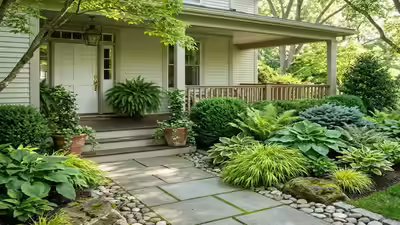
What to plant in a dark entry bed so it looks bright instead of muddy by midsummer? Image credit – Gemini
A shady garden bed ought to be tranquil and inviting. However, the bed may appear too dark, unbalanced, or bulky by midsummer. It is not the shade itself that makes such problems arise, but rather how you design the planting in the shade. As pointed out by many gardening experts, the most important things in designing a shady garden are not only flowers but foliage, shape, and structure.What many homeowners do not realise about the proper planting in the shade is that it is all about choosing appropriate plants based on soil conditions, especially root competition and moisture near trees and buildings. Filling the entire shady garden with dark green plants of similar height will simply turn it into one flat green area seen from outside the house. To have your shady bed brighter, use contrasting elements and repetition in the layout.Use lighter foliageOne of the simplest solutions for making a shade garden bright is using different shades of green foliage. Plants like hostas with paler foliage, Japanese painted ferns, heuchera, and ornamental grasses that grow well in the shade can enhance the entire appearance of the garden. According to the University of Minnesota Extension, ornamental grasses that grow in the shade provide motion and texture while keeping shade gardens from becoming monotonous. It does not mean adding lots of colours to the bed. It is better to repeat some foliage colours that bring vibrancy to the space. Big leaves also play an important role. Large, clean leaves are visible even at night, while small leaves are hard to see against the background of darkness.Structure should be placed in areas where people will pay attention firstWhen designing a shaded entry bed, one must choose plants with evergreen foliage that serve as anchors in the garden bed. Boxwood, dwarf hollies, yew, and other evergreen varieties can create structure in the garden even after their flowers wither. The other elements of the landscape should complement rather than compete with those anchors.This is particularly true at entrances, as people perceive the area rapidly when heading to the front door. Large shapes stand out more than scattered flowers. Neatness around the border makes an enormous difference, too. Landscape experts usually recommend that a neat front border will make any garden look more professional.
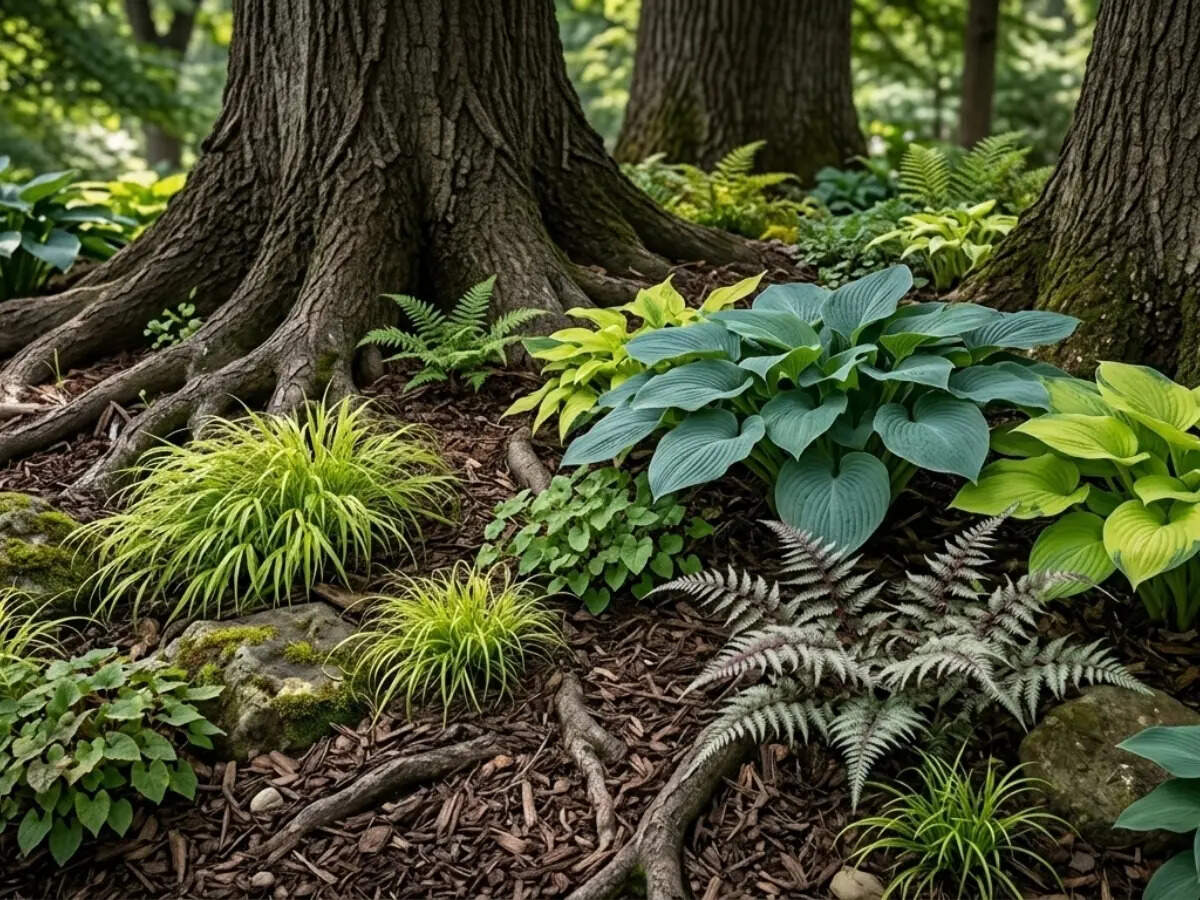
Simple planting trick that fixes why your shade garden looks patchy and dull. Image credit – Gemini
Dry shade could be the culpritShade gardeners frequently find that their shady beds don’t work because of dry soil rather than a lack of sunlight. According to Penn State Extension, areas below trees and overhanging roofs suffer from “dry shade,” meaning roots and infrequent rain make growing plants challenging. This explains the failure of sun-loving plants planted in what seemed like sunny spots close to houses or tree canopies. The soil tends to dry out much faster than one might think.One would benefit from determining whether the roots of nearby trees are taking up too many nutrients before planting anything. Composting and irrigation will help immensely.The selection of plants for shade that do well in dry conditions may be more significant than selecting “shade-tolerant” plants.Why less is more for gardensShade gardens crowded with many plants will tend to look murky in midsummer. Air circulation becomes reduced, leaves overlap, and the shapes of the separate plants are lost visually. The best shade garden designs are typically those that are simplified rather than overloaded.Most design professionals recommend using different layers of plantings with distinct functions in mind. For example, one could give shape, another fill, and another provide motion or seasonality. This creates visual rhythms without making the composition chaotic.Grouping similar plants is also important. A group of three identical ferns or hostas is always visually simpler than a dozen disparate plants crammed into a small space.How to finish the designAn effective entry bed design in the shade should look complete and harmonious even without flowers. This is precisely why textures, spaces, and evergreen forms play such an essential role. Flowers can accentuate the design, but they cannot be its only element.The mulch also serves an important function. A new layer of dark mulch provides contrast, which makes light green foliage more visible.All of these upgrades represent small to medium efforts, not a complete overhaul of the yard’s landscaping. It’s possible to bring more light into a garden entrance bed just by doing some trimming, thinning, and adding new evergreen plants for accent. It’s a place where you can relax during the long days of summer.