Headlines

Colorado scientists convert carbon dioxide into durable plastic: Solving two biggest environmental problems of planet Earth |

Image Credit: (Representational Image: iStock) Carbon dioxide is a naturally occurring gas, abundant in quantity but its chemical stability makes it difficult to convert into useful materials. Since the 1960s, scientists have been attempting to transform carbon into polymers, which require specific catalysts to overcome the energy barriers. Some success was achieved in creating various…

Read More

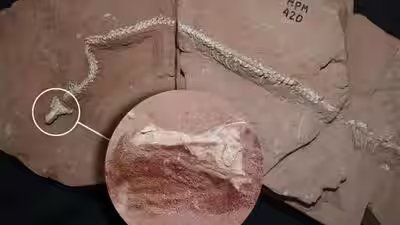
80-million-year-old snake skull discovery in Brazil proves that ancient snakes conquered the three worlds at once |

The skull and brain case of a newfound ancient snake species were still intact. Image Credit: Agustin Martinelli/ScienceNews Snakes represent one of the most successful groups of vertebrates on Earth, with over 4,200 living species accounting for one-third of all scaled reptiles. Despite a long history going back to at least the Middle Jurassic, the…

Read More

Quote of the Day by Marie Curie: “Nothing in life is to be feared, it is only to be understood.” |

Marie Curie’s profound observation underscores the power of understanding as a tool to conquer life’s fears. She posited that knowledge serves as a buffer against uncertainty, fostering self-assurance. As a trailblazing scientist, she unearthed polonium and radium, earning Nobel Prizes for her remarkable contributions to physics and chemistry. Her enduring message of curiosity and the…

Read More

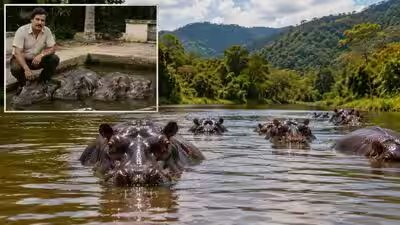
In 1980s, Colombia inherited 4 hippos left behind at Pablo Escobar’s estate, but today they have grown into world’s largest invasive hippo population |

In Colombia, the hippos originally imported by Pablo Escobar have become an ecological menace. Initially introduced for his private zoo, their population has surged to over eighty, wreaking havoc on local waterways. Their excrement disrupts the delicate balance of river ecology, depleting oxygen levels and triggering harmful algal blooms. Addressing this invasive species poses significant…

Read More

US buried 56 million gallons of highly radioactive waste in 177 underground tanks in 1990, now experts will use it to make 4.2 metric tons of glass daily

Along with Russia, the United States possesses nearly 90% of all nuclear weapons on Earth. The country has over 5,044 total warheads and is known to have the most balanced and heavily maintained strategic triad delivery systems. While it has no need to amp up on developing more nuclear weapons, it needs to urgently clear…

Read More

Scientists reveal how green roofs lower rooftop temperatures by 40°F from heat traps to cooling systems |

Green roofs offer a solution to urban heat by absorbing sunlight and releasing water. Vegetation shades surfaces and evapotranspiration naturally cools surrounding areas. These living roofs also manage rainwater and provide habitats for urban wildlife. Extensive and intensive systems cater to different building needs and budgets. Cities worldwide are adopting green roofs to combat rising…

Read More

Scientists created the world’s whitest paint that reflects 98.1% of sunlight and it could cool buildings without air conditioning |

Keeping buildings cool has become an increasingly difficult challenge as temperatures rise and air conditioning demand continues to grow. While cooling systems provide comfort, they also consume large amounts of electricity, adding to energy costs and greenhouse gas emissions. That has encouraged scientists to look for alternatives that work with nature rather than against it….

Read More

Meet Marie Tharp: The woman who never went to sea but discovered the hidden world beneath the oceans in 1957 and changed Earth science forever |

For much of the twentieth century, the deepest parts of the oceans remained among the least understood places on Earth. Ships crossed vast stretches of water every day, yet almost nobody knew what lay beneath them beyond scattered depth measurements collected for navigation. The seabed was often imagined as a broad, featureless plain interrupted only…

Read More

Scientists develop technology that turns factory exhaust carbon dioxide into useful chemicals; new study reveals |

Industrial plants release vast amounts of carbon dioxide every day, yet much of the conversation around cutting those emissions has focused on capturing the gas and storing it underground. Turning it into something useful has always been a more attractive idea, but one that has struggled outside laboratory conditions. Factory exhaust is not made up…

Read More