







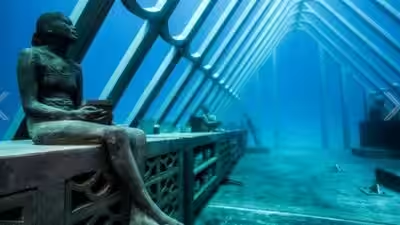
In 2019, a 165-tonne underwater art structure was submerged beneath the Great Barrier Reef; today, coral and marine creatures are slowly transforming the structure |

Beneath the surface of the Great Barrier Reef, a 165-tonne building is being slowly reshaped by the environment around it. The Coral Greenhouse, an underwater installation at John Brewer Reef, was designed to work with the sea rather than simply sit on the seabed. Coral can grow across its surfaces, fish can move through its…

Read More

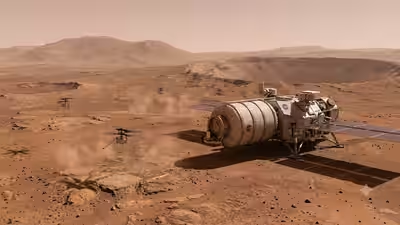
Nasa’s 2028 Mars mission will send a spacecraft with a nuclear reactor toward Mars and release three small helicopters to explore the planet |

In late 2028, Nasa plans to send something unusual towards Mars, a spacecraft carrying a working nuclear reactor designed to generate electricity for propulsion in deep space. Space Reactor-1 Freedom is intended to test nuclear electric propulsion beyond Earth orbit, where conventional solar power becomes increasingly difficult to use. The spacecraft will not land on…

Read More

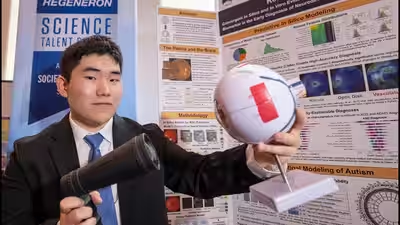
Meet Edward Kang, the 17-year-old New Jersey student who used retinal images to train AI for autism and ADHD screening; his project won a $175,000 science prize

For his project, Kang trained AI models to detect patterns associated with neurodevelopmental disorders from a large public dataset of retinal images. Instead of one approach, he used several techniques to improve the performance of the models. What if a simple picture of the eye could help doctors diagnose neurodevelopmental conditions earlier? For 17-year-old Edward…

Read More

Cashew shells once treated as waste are entering the shipping industry, with their residue-based energy tested aboard a commercial vessel |

A pile of discarded cashew shells would normally have little to do with international shipping. In Maharashtra agricultural leftovers are being fed into reactors that can turn them into usable fuel, gases and biochar. The technology comes from an unusual India-Denmark partnership built around the Viking biomass gasifier developed at the Technical University of Denmark….

Read More

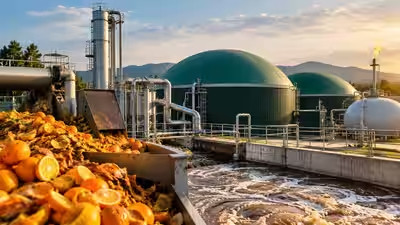
Brazil’s giant orange juice plant will turn citrus wastewater into biogas to power industrial operations |

A major orange juice processing project in Brazil is taking an unusual approach to one of the industry’s biggest waste streams: turning citrus wastewater into renewable energy. Louis Dreyfus Company (LDC) is building what it describes as the world’s largest plant dedicated to producing biogas from citrus effluent at its industrial facility in Bebedouro, São…

Read More

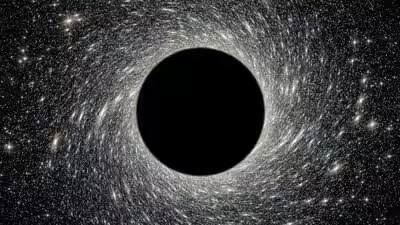
Some stars repeatedly skim past supermassive black holes, lose material and survive; scientists now think their unusually rapid spin explains why each returning flare becomes progressively dimmer

Representative Image (Canva) Some stars can make repeated close passes around supermassive black holes, losing part of their material each time while surviving to return again. These encounters produce bursts of light, or flares, that can recur months or even years apart. But astronomers have been puzzled by a pattern seen in some of these…

Read More

Researchers developed custom 3D-printed replacements for missing sections of ancient pottery and embedded sensors inside them, allowing conservators to monitor temperature, strain and environmental damage

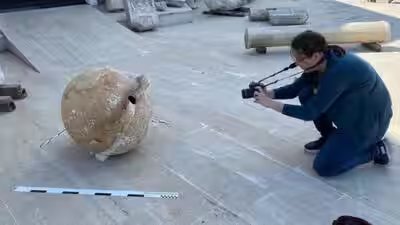
Dr. Savannah Ulalian Bishop photographs an archaeological amphora (Picture: KOC University) Imagine an ancient amphora recovered from the seabed after centuries underwater. It may be cracked, covered with deposits or missing large sections. Restoring such an object is difficult without causing further damage.To overcome this problem, researchers at Koc University in Turkiye have developed a…

Read More